


Easy Shrimp Fried Rice has been my go-to weeknight rescue for years, bringing the comfort of Chinese takeout right to my kitchen. This classic dish combines tender shrimp, fluffy rice, and crisp vegetables in a savory sauce that comes together in just one pan. It’s a staple of Chinese-American cuisine that celebrates simplicity and speed without sacrificing flavor. I love how it turns leftover rice into something spectacular, making it a practical and satisfying meal every time.
Why You'll Love This Recipe
- It’s on the table in 30 minutes flat
- You likely have most ingredients in your freezer and pantry already
- Swap in your favorite veggies or protein for a new twist every time
- My family requests this more than actual takeout
Ingredients You’ll Need
- Vegetable oil: for stir-frying at high heat without smoking choose a neutral oil like canola or avocado for best results
- Shrimp: medium size cooks quickly and stays tender look for fresh or frozen peeled and deveined to save time
- Eggs: lightly beaten for fluffy scrambled bits that add protein and texture farm-fresh eggs will give a richer color
- Garlic: minced finely for aromatic depth that infuses the entire dish fresh cloves are always superior to pre-minced
- Ginger: freshly grated for a bright zing that cuts through the richness keep a knob in the freezer for easy grating
- Frozen peas and carrots mix: a convenient shortcut that adds color and sweetness straight from the freezer no thawing needed
- Cooked jasmine rice: cold and day-old for separate grains that fry up perfectly leftover rice is the secret here
- Soy sauce: for that iconic salty umami backbone use a good quality brand like Kikkoman for authentic flavor
- Green onions: sliced with white parts for cooking and green for garnish they add a fresh oniony crunch
- Sesame oil: optional but recommended for a nutty aromatic finish that ties everything together a little goes a long way
- Salt and black pepper: to taste for balancing the final flavors season gradually as soy sauce is already salty
- Toasted sesame seeds: optional garnish for a subtle crunch and visual appeal toast them lightly in a dry pan for extra aroma
- Extra sliced green onions: optional garnish for a burst of fresh color and flavor the more the merrier in my book
How to Make It
Heat Oil and Cook Shrimp:
Grab your largest wok or skillet and heat one tablespoon of vegetable oil over medium-high heat. Add the shrimp in a single layer and let them cook undisturbed for about two minutes per side until they turn pink and opaque. Removing them to a plate now prevents overcooking and keeps them juicy for later.
Scramble the Eggs:
Pour your lightly beaten eggs into the same hot wok and let them set for just a few seconds. Use your spatula to gently scramble them into soft curds, which takes about a minute or two. Transfer them to the plate with the shrimp so they don’t get rubbery.
Sauté Aromatics:
Add the remaining tablespoon of oil to the wok and toss in the minced garlic and grated ginger. Stir them constantly for about 30 seconds until they become incredibly fragrant – this builds the flavor foundation for the whole dish.
Cook the Vegetables:
Dump in the frozen peas and carrots mix and stir everything together. Let them cook for two to three minutes, stirring occasionally, until they’re thawed and heated through. This quick cook keeps them vibrant and crisp-tender.
Stir-Fry the Rice:
Crank the heat up to high and add your cold, day-old jasmine rice. Use your spatula to break up any clumps and press the rice into the hot surface of the wok. Fry it for three to four minutes until it’s steaming hot and some grains get slightly crispy.
Season with Soy Sauce:
Drizzle the soy sauce evenly over the rice and stir quickly to coat every grain. The high heat will caramelize the sauce slightly, giving you that deep, savory flavor you crave from takeout.
Combine Everything:
Return the cooked shrimp and scrambled eggs to the wok. Gently fold them into the rice along with the white parts of the green onions and the sesame oil if using. Be careful not to break the egg curds too much while you heat everything through for another minute.
Final Seasoning and Garnish:
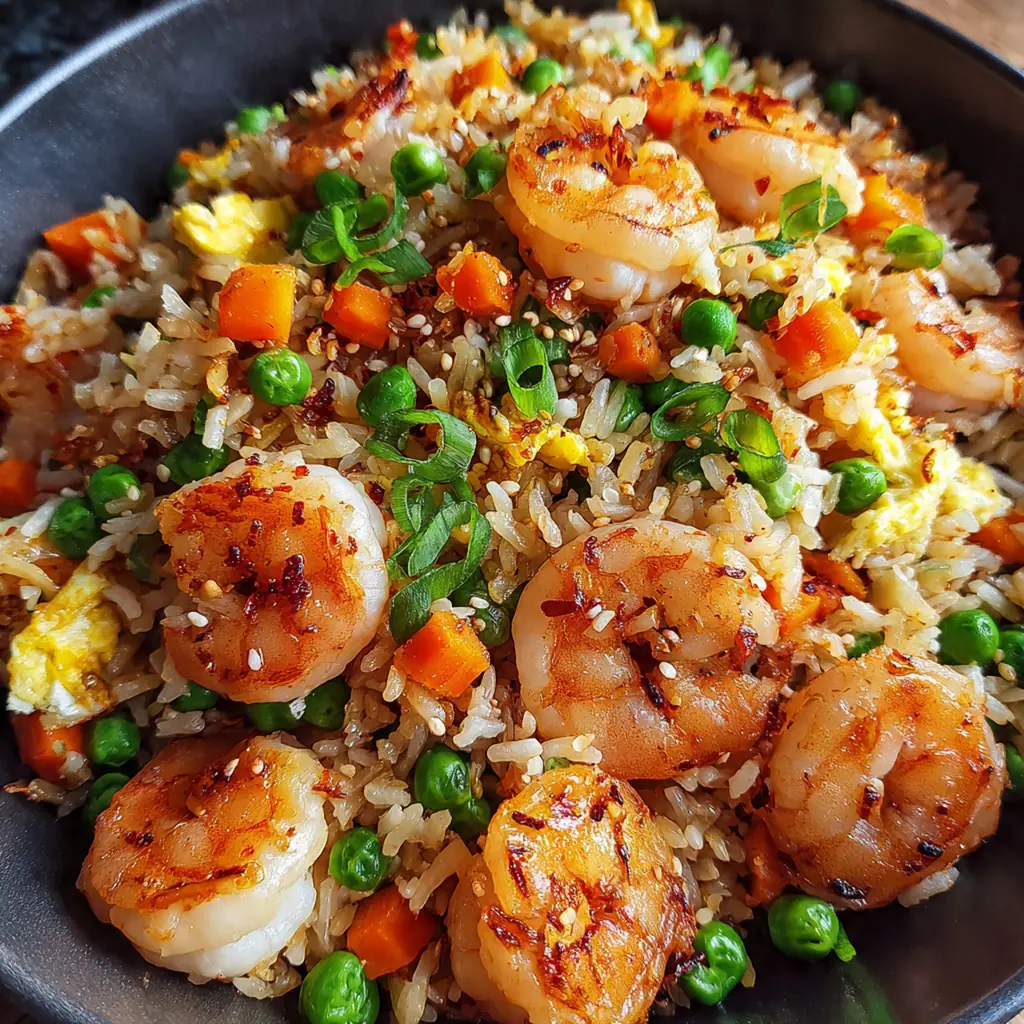
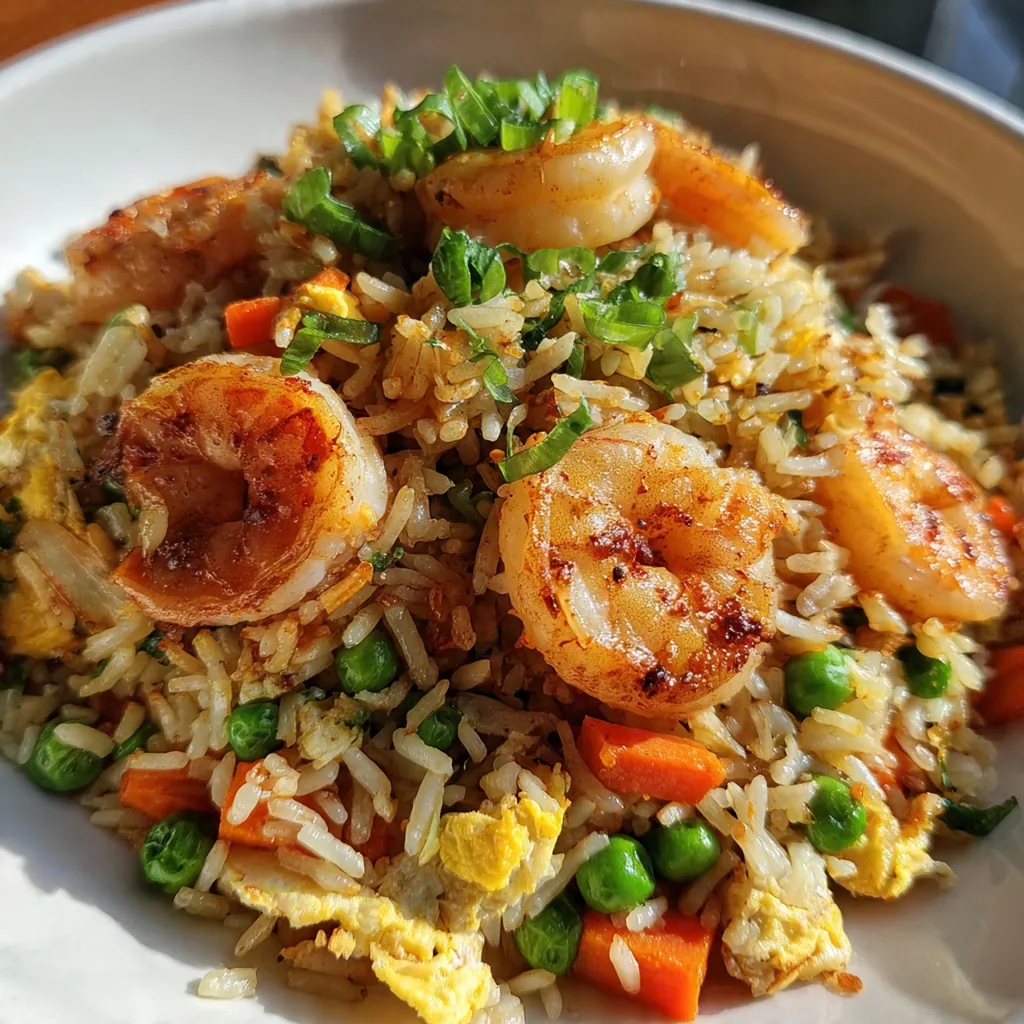
Give the fried rice a taste and add salt and black pepper as needed. Turn off the heat and immediately transfer it to a serving dish. Top it with the green onion greens and toasted sesame seeds for a fresh, finishing touch.
You Must Know
- Cold day-old rice is non-negotiable for perfect separate grains
- Have everything chopped and measured before you turn on the stove
- High heat is your friend for that signature wok flavor
- I always make extra because leftovers disappear fast
Storage Tips
Leftover shrimp fried rice keeps beautifully in an airtight container in the fridge for up to three days, though in my house it rarely lasts that long. Reheat it in a skillet over medium heat with a tiny splash of water to revive the texture without drying it out, or use the microwave in short bursts stirring in between. The shrimp stays tender and the flavors meld even more overnight, making it a fantastic next-day lunch you’ll actually look forward to.
Ingredient Substitutions
If you’re out of shrimp, diced chicken or tofu work just as well for a protein punch, and any frozen veggie mix you have on hand will do in place of peas and carrots. For a gluten-free version, swap the soy sauce for tamari or coconut aminos, and if eggs aren’t your thing, simply leave them out or add extra firm tofu cubes. The beauty of this dish is its flexibility – I’ve even used quinoa instead of rice when that’s what was in the fridge.
Serving Suggestions
This shrimp fried rice is a complete meal on its own, but I love rounding it out with a side of crispy egg rolls or fresh spring rolls for crunch. A simple cucumber salad with rice vinegar cuts through the richness perfectly, or for a fuller spread, start with a bowl of hot and sour soup. It’s also fantastic with a drizzle of chili oil for heat or extra soy sauce on the table for those who like it saltier.
Cultural Context
Shrimp fried rice is a cornerstone of Chinese-American takeout menus, but its roots trace back to centuries of Chinese cooking where fried rice was born as a practical way to use leftover rice. Unlike some regional Chinese fried rice that might use specific ingredients like char siu or salted fish, this version with shrimp and mixed vegetables reflects the adaptability and resourcefulness of home cooking across cultures. It captures the essence of wok cooking – high heat, quick movement, and balanced flavors – that makes Chinese cuisine so beloved worldwide. My version stays true to that spirit while being accessible for any home cook.
Pro Tips
- Day-old rice straight from the fridge fries up without clumping
- Mise en place is critical because once you start cooking it goes fast
- A screaming hot wok gives you that restaurant-style smoky char
- For gluten-free friends tamari is an identical swap for soy sauce
Frequently Asked Questions
For the best texture, use cold, day-old jasmine rice. The grains are firmer and less sticky, which helps them fry up nicely without becoming mushy. If you don’t have day-old rice, spread freshly cooked rice on a baking sheet and chill it for 30 minutes before using.
Yes, you can make it ahead and store it in an airtight container in the refrigerator for up to 3 days. Reheat it in a wok or skillet over medium heat until hot. For best results, add a splash of water or broth when reheating to refresh the rice and prevent dryness.
You can use any quick-cooking vegetables you have on hand. Diced bell peppers, corn, or chopped broccoli florets are great alternatives. If using fresh vegetables, sauté them for a minute or two longer until tender-crisp before adding the rice.
The dish is ready when the shrimp are pink and cooked through, the vegetables are tender, and the rice is heated and slightly crispy in spots. The entire cooking process for the fried rice itself should only take about 5-7 minutes once all ingredients are in the pan.
This dish is a complete meal on its own, but you can serve it with a side of egg rolls, steamed dumplings, or a simple cucumber salad for a refreshing contrast. For a traditional Chinese meal pairing, a light hot and sour soup also works beautifully.