


Turkey Marinara Spaghetti Squash has become my go-to for a hearty, feel-good meal that doesn’t weigh me down. This Italian-American twist on a classic swaps out traditional pasta for roasted spaghetti squash, creating a wonderfully light yet satisfying base for a robust turkey marinara. I love how it transforms simple pantry staples into a dinner that feels special and nourishing. It’s the perfect answer when you’re craving comfort food but want to keep things wholesome and high in protein.
Why You'll Love This Recipe
- It’s a low-carb, high-protein twist on a classic pasta night that truly satisfies
- You get that fun, twirlable texture of spaghetti without any of the heaviness
- The sauce simmers into a rich, flavorful hug in under twenty minutes
- Leftovers are arguably better, making your weeknight meal prep a breeze
- Honestly, it’s the dinner I crave most on a chilly evening
Ingredients You’ll Need
- Spaghetti squash: the star that transforms into tender, noodle-like strands when roasted, look for a firm squash with a pale yellow rind and no soft spots.
- Olive oil: helps the squash caramelize and cooks the onions and turkey, a good extra virgin olive oil adds a fruity depth.
- Kosher salt: enhances the natural sweetness of the squash and balances the acidity in the tomatoes, its coarse grain is perfect for pinching.
- Black pepper: adds a warm, earthy backbone to both the squash and the savory turkey marinara sauce.
- Lean ground turkey: a lighter, high-protein alternative to beef that soaks up all the herby tomato flavors beautifully.
- Yellow onion: the aromatic base that sweetens as it cooks, building a foundation of flavor for your sauce.
- Garlic: minced finely to infuse the oil and turkey with that irreplaceable, fragrant punch.
- Crushed tomatoes: the rich, velvety body of the sauce, I prefer a brand with no added sugar for the purest tomato taste.
- Tomato paste: a flavor powerhouse that adds concentrated tomato depth and helps thicken the turkey marinara.
- Dried oregano: that classic Italian herb flavor that blooms and becomes more aromatic when simmered in the sauce.
- Dried basil: complements the oregano with a slightly sweet, peppery note that ties the whole sauce together.
- Red pepper flakes: just a pinch gives the turkey marinara a gentle, warming heat that you can adjust to your taste.
- Water or low-sodium chicken broth: loosens the sauce to the perfect spoonable consistency and helps all the flavors meld.
- Fresh basil leaves: a bright, peppery garnish that makes the finished dish look and smell incredible.
- Grated Parmesan cheese: the salty, umami-rich finishing touch that adds a creamy, savory element to each bite.
How to Make It
Preheat and Prep Your Squash:
Start by getting your oven hot and lining a baking sheet. Cutting the squash is the toughest part, but a sharp chef’s knife and a steady hand make it easy. Placing it cut-side down helps it steam-roast, making the flesh incredibly tender and easy to shred later.
Season and Roast the Squash:
Drizzle the squash with oil and season it well right on the baking sheet. Roasting it cut-side down is the key—it concentrates the heat and steam to soften the flesh perfectly. You’ll know it’s done when a fork pierces the skin easily with no resistance.
Start Your Savory Base:
While the squash roasts, heat oil in your skillet and cook the diced onion until it’s soft and sweet. This step builds a flavor foundation, so don’t rush it—those golden, translucent onions make all the difference in your final turkey marinara.
Cook the Turkey and Garlic:
Add the garlic just for a quick thirty seconds until it’s fragrant, then crumble in the ground turkey. Use your wooden spoon to break it up as it cooks so you get a nice, even texture in every spoonful of sauce.
Build and Simmer the Sauce:
This is where the magic happens. Stir in all your tomatoes, herbs, and seasonings, then add the liquid. Letting it simmer with the lid on allows the flavors to marry and the sauce to thicken just enough to cling to the squash strands beautifully.
Shred the Squash:
Once the squash is cool enough to handle, grab a fork and scrape from top to bottom. You’ll be amazed at how easily it transforms into long, perfect spaghetti-like strands. Transfer them to a bowl to keep them warm and fluffy.
Combine and Serve:
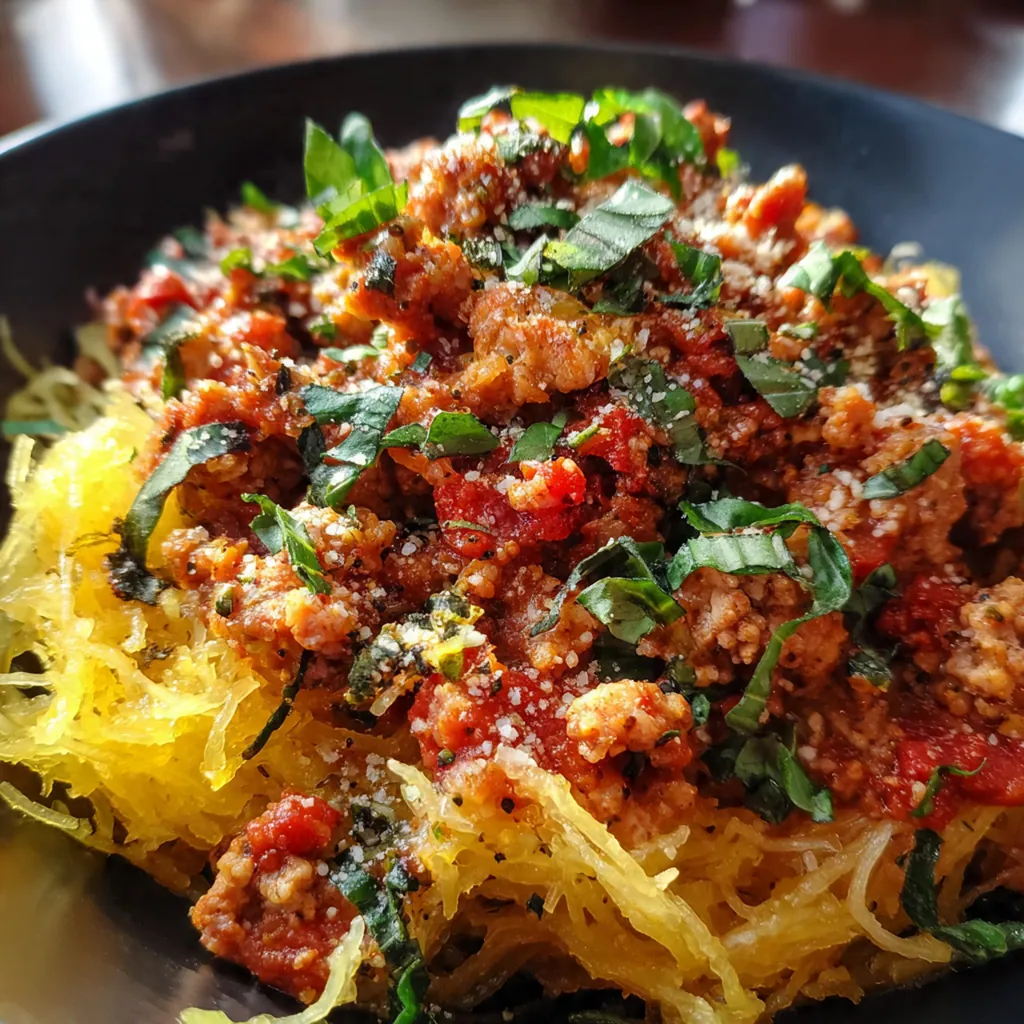
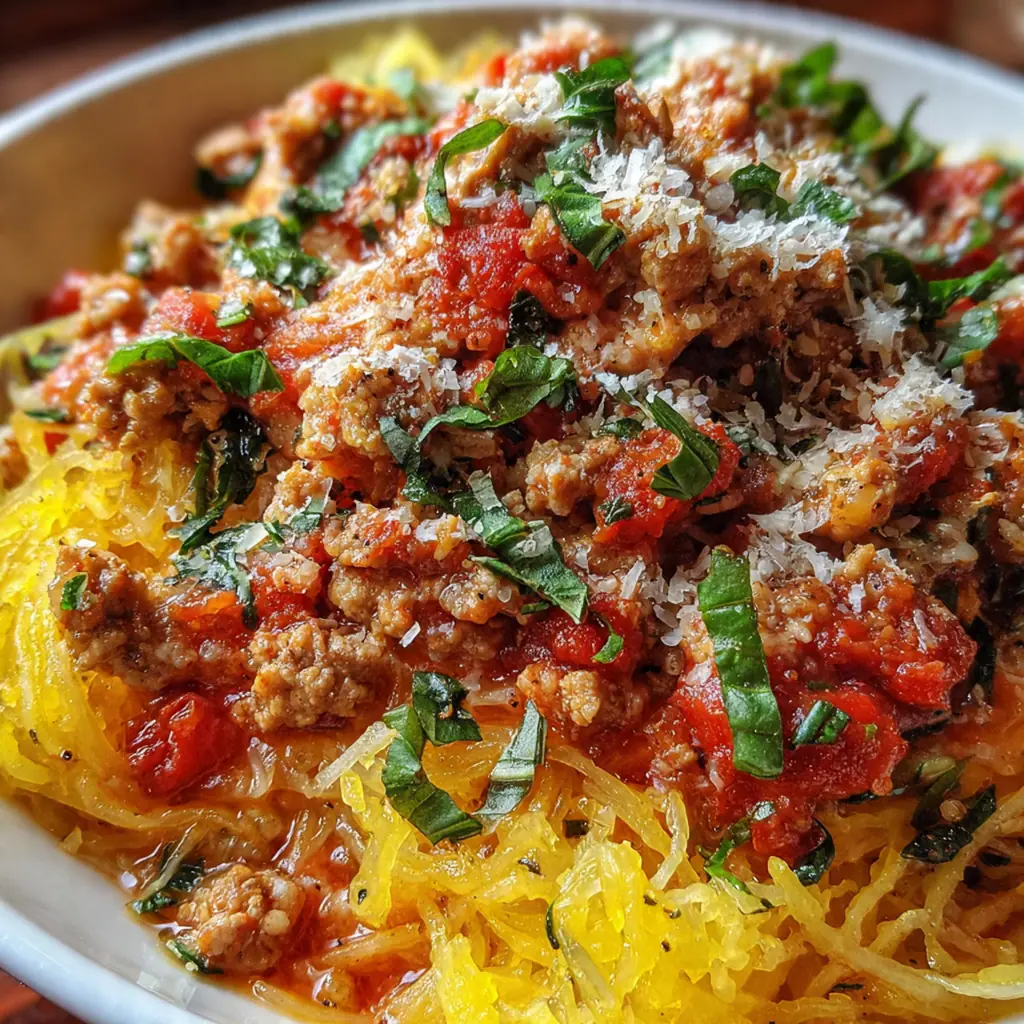
Divide the warm spaghetti squash strands among your bowls. Ladle that hot, hearty turkey marinara sauce right over the top, making sure each portion gets plenty of meat and savory goodness.
Add the Finishing Touches:
This is the moment that makes it feel restaurant-worthy. Tear over some fresh basil and shower it with a generous sprinkle of Parmesan cheese. These fresh elements brighten up the entire dish and add layers of flavor.
You Must Know
- Roasting the squash cut-side down is non-negotiable for perfect texture
- Let the sauce simmer the full time for the best flavor development
- Scraping with a fork gives you the ideal ‘spaghetti’ strands
- It’s a meal that tastes even better as leftovers
- I always make a double batch of the sauce to freeze
Storage Tips
Store any leftovers in airtight containers in the fridge, keeping the squash and turkey marinara sauce separate if you can for the best texture. They’ll stay good for up to three days, and the flavors really do deepen overnight. Reheat the squash quickly in the microwave and warm the sauce in a skillet over medium heat until bubbly. You can also freeze just the turkey marinara sauce for up to two months in a freezer-safe bag—it’s a lifesaver for a future quick dinner over pasta or zucchini noodles.
Ingredient Substitutions
If you can’t find spaghetti squash, zucchini noodles (zoodles) are a great fresh alternative, though they’ll cook much faster. Swap the ground turkey for ground chicken or even a plant-based crumble if you prefer. Fresh herbs can stand in for dried—use triple the amount of chopped fresh oregano and basil added right at the end. No yellow onion? A white or red onion works just fine, and in a pinch, a teaspoon of onion powder added with the garlic will do. For a richer sauce, try using a cup of dry red wine instead of the water or broth, letting it reduce for a minute before adding the tomatoes.
Serving Suggestions
I love to serve this with a big, simple arugula salad dressed in lemon juice and olive oil for a peppery crunch. A slice of warm, crusty whole-grain bread is perfect for sopping up any extra turkey marinara sauce that escapes. For a more complete Italian-American feast, add some roasted broccoli rabe or a few garlicky meatballs on the side. It’s also fantastic with a glass of medium-bodied red wine like a Chianti, which complements the savory tomato and herbs beautifully.
Cultural Context
This dish is a beautiful example of Italian-American comfort food, taking the concept of pasta al ragù and giving it a modern, health-conscious twist. Using squash as a pasta substitute taps into a broader trend of vegetable-forward cooking, but the soul of the recipe lies in that slow-simmered, herb-infused tomato sauce. That technique of building flavor with soffritto—onion and garlic—and letting the sauce develop over low heat is straight from a classic nonna’s kitchen. It’s a fusion that respects tradition while adapting to how we like to eat today, focusing on whole, satisfying ingredients without sacrificing an ounce of flavor.
Pro Tips
- Microwave the whole squash for a few minutes to soften the skin before cutting
- A splash of balsamic vinegar in the sauce adds a wonderful sweet-tart depth
- Don’t overcrowd the pan when browning the turkey—it steams instead of sears
- Let the baked squash cool a bit so you don’t burn your hands shredding it
- I always save a few fresh basil leaves to tear over at the very end
Frequently Asked Questions
For the best results, use a medium-sized spaghetti squash, which typically weighs 3-4 pounds. This variety, when roasted, naturally separates into long, firm-tender strands that perfectly mimic pasta and hold the robust turkey marinara sauce without getting soggy.
Yes, you can prepare components ahead. Roast the squash and cook the turkey marinara sauce separately. Store them in airtight containers in the refrigerator for up to 2 days. Reheat the sauce in a pan and warm the squash in the oven or microwave before serving.
For a similar lean protein, ground chicken is a great substitute. If you’re not worried about fat content, you could use ground beef, pork, or even a plant-based ground meat alternative. Adjust the cooking time slightly based on your chosen protein.
The squash is ready when the skin is easily pierced with a fork and the flesh pulls away in long, spaghetti-like strands with little resistance. This usually takes 40-45 minutes in a 400°F oven. The edges will start to brown slightly when perfectly roasted.
This dish is a complete meal on its own, but for an Italian-American feast, pair it with a simple side salad dressed with Italian vinaigrette and a slice of crusty garlic bread. It also pairs wonderfully with steamed broccoli or roasted asparagus.