


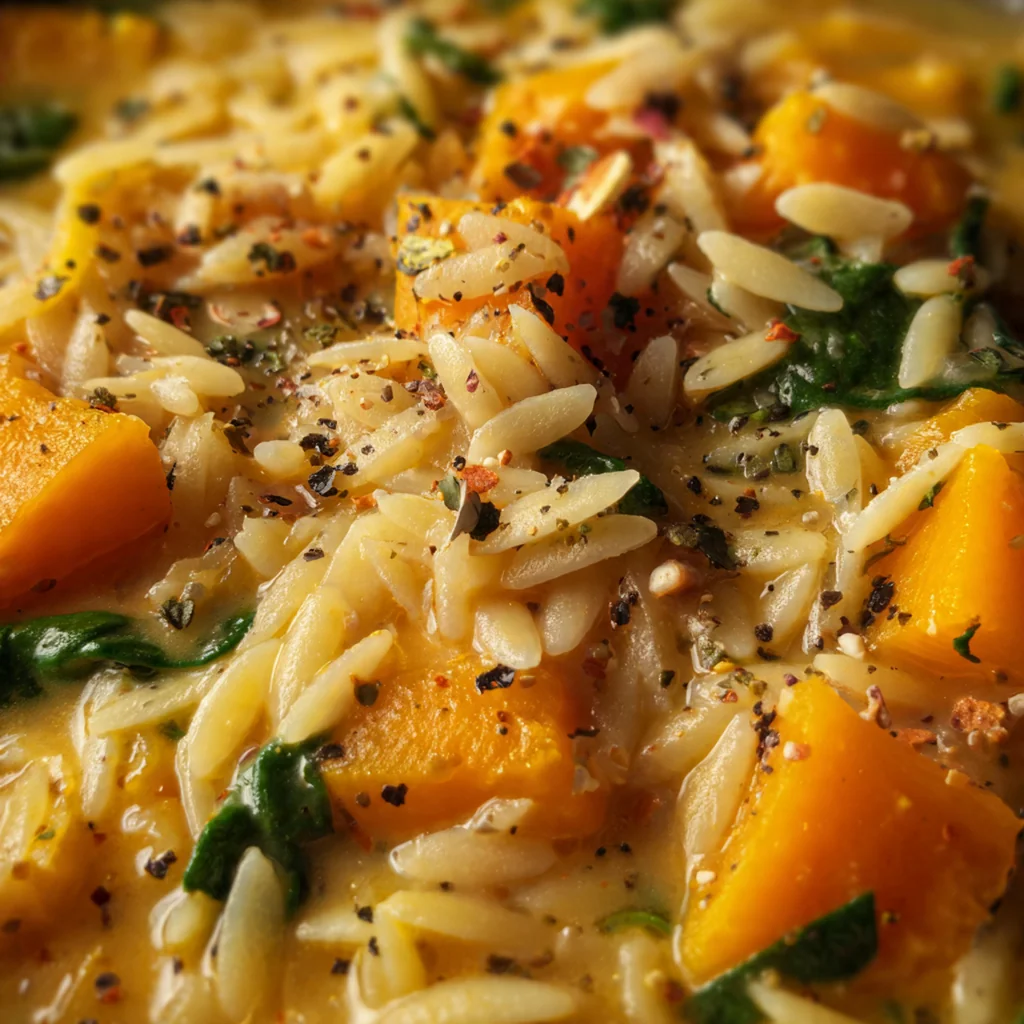
My creamy orzo butternut squash recipe is the ultimate cozy weeknight dinner that delivers rich flavor without any heavy cream. This Italian-American one-pan wonder combines nutty toasted orzo with sweet roasted squash and earthy sage for restaurant-quality comfort food. The natural creaminess comes from the pasta itself, making cleanup a breeze while keeping things surprisingly light. I love making this during the colder months when I crave something warm and satisfying but don’t want to spend hours in the kitchen. It’s a perfect example of how simple ingredients can create something truly special.
Why You'll Love This Recipe
- The squash caramelizes while roasting, creating a deep, sweet flavor that pairs perfectly wi…
- Toasting the orzo first adds a rich nuttiness you just don’t get from boiling pasta straight…
- You get that creamy, luxurious texture naturally from the starch in the pasta, no heavy dair…
- Everything cooks in a single skillet or Dutch oven, which means minimal dishes and more time…
- I’ve made this for dinner parties and busy weeknights alike, and it never disappoints
Ingredients You’ll Need
- Butternut Squash: Look for a firm squash with a matte rind, avoiding any soft spots. This provides the sweet, caramelized base for the dish. Roasting brings out its natural sugars.
- Olive Oil: Use a good quality extra virgin olive oil for roasting the squash and sautéing the aromatics. It adds a fruity richness and helps everything brown beautifully.
- Yellow Onion: Finely diced yellow onion creates a sweet, savory foundation. It softens to almost melt into the sauce, providing depth without overpowering the other flavors.
- Garlic: Fresh cloves are best for their pungent, aromatic bite. Minced finely, they infuse the oil with flavor right before you add the pasta.
- Fresh Sage: These fragrant leaves are essential for that cozy, autumnal flavor. Chopped fresh sage releases its oils when sautéed, perfuming the entire dish.
- Dry Orzo Pasta: This small, rice-shaped pasta is the star. Toasting it until golden brown before adding liquid is the secret to a nutty taste and preventing it from getting mushy.
- Vegetable Broth: Warm broth is key for steady cooking. It hydrates the orzo and creates a flavorful, simmering liquid that gets absorbed right into the pasta.
- Parmesan Cheese: Adds a salty, umami punch and creates that signature creamy texture when melted in. Freshly grated works best for melting smoothly.
- Unsalted Butter: Stirred in at the end, butter adds a final layer of richness and silkiness. Using unsalted lets you control the final seasoning.
- Fresh Lemon Juice: This is the brightener. A splash at the very end cuts through the richness and makes all the other flavors pop. Never skip this step.
- Red Pepper Flakes: Optional, but highly recommended for a gentle heat that contrasts beautifully with the sweet squash and savory cheese.
- Toasted Walnuts: An optional topping for adding a delightful crunch and nutty flavor that complements the orzo.
- Fresh Parsley: Used for garnish, it adds a touch of freshness and vibrant color to the finished dish, making it look as good as it tastes.
How to Make It
Roast The Squash:
Preheat your oven to 400°F (200°C). On a large baking sheet, toss the diced butternut squash with one tablespoon of olive oil, half a teaspoon of salt, and the black pepper. Spread it out in a single layer to ensure it roasts instead of steams. Roast for 20-25 minutes, tossing halfway through, until the squash is tender with golden, caramelized edges.
Sauté The Aromatics:
While the squash is in the oven, heat the remaining two tablespoons of olive oil in a large skillet or Dutch oven over medium heat. Add the finely diced yellow onion and cook for 4-5 minutes. You want it softened and translucent, but not browned, to build a sweet flavor base for the orzo.
Bloom The Herbs:
Add the minced garlic and chopped fresh sage directly to the skillet with the onions. Sauté for just one minute until you can smell the aromas. Stir constantly during this step because garlic can burn quickly and turn bitter, which you want to avoid.
Toast The Orzo:
Pour the dry orzo pasta into the skillet. Toast the pasta, stirring frequently for about 2-3 minutes, until it turns a deep golden brown and smells nutty. This toasting step is crucial; it develops a complex flavor and helps the pasta hold its shape during simmering.
Simmer The Pasta:
Pour in the warm vegetable broth, making sure to scrape up any delicious browned bits from the bottom of the pan. Bring the mixture to a boil, then immediately reduce the heat to medium-low. Simmer uncovered for 10-12 minutes, stirring occasionally, until the orzo is al dente and most of the liquid is absorbed.
Combine Everything:
Once the squash is roasted and the orzo is cooked, add the roasted squash to the skillet. Stir in the unsalted butter, the remaining half teaspoon of salt, and the fresh lemon juice. The butter will melt to create a silky coating, and the lemon juice will brighten everything up.
Finish With Creaminess:
Remove the skillet from the heat completely. Stir in the one cup of grated Parmesan cheese until it melts into the orzo, creating a luscious, creamy sauce. Taste the dish now and adjust the seasoning with more salt or black pepper if you think it needs it.
Serve Immediately:
Serve this creamy orzo butternut squash dish immediately while it’s hot and creamy. Garnish with extra Parmesan cheese, a sprinkle of fresh parsley, or red pepper flakes if you want a little kick. The dish will thicken as it cools, so it’s best enjoyed right away.
You Must Know
- Toast the orzo until it smells deeply nutty and looks golden brown before adding liquid to p…
- Use warm broth to maintain the cooking temperature and help the pasta cook evenly without se…
- Don’t skip the lemon juice at the end; that acid cuts the richness and makes every ingredien…
- The Parmesan melts in best off the heat, so wait until the skillet is no longer simmering be…
Storage Tips
Store any leftover creamy orzo in an airtight container in the refrigerator for up to four days. As it cools, the pasta will naturally thicken and absorb more liquid, so don’t worry if it looks a bit stiff. When you’re ready to reheat, add a splash of water or extra broth to loosen the sauce back up to your desired consistency. You can warm it gently on the stovetop over low heat, stirring frequently, or use the microwave in short bursts, stirring in between to ensure it heats evenly without drying out.
Ingredient Substitutions
If you don’t have butternut squash, you can easily swap it for pumpkin or even sweet potato, just be sure to dice them into similar-sized pieces for even roasting. For a dairy-free version, use nutritional yeast in place of the Parmesan cheese and a plant-based butter or just extra olive oil for richness. In a pinch, vegetable bouillon or even water with a splash of soy sauce can stand in for the vegetable broth, though broth gives the best flavor. If you can’t find fresh sage, a teaspoon of dried sage will work, but add it with the onions so it has time to rehydrate and release its flavor.
Serving Suggestions
This creamy orzo butternut squash is substantial enough to serve as a complete vegetarian main course for four people, especially when you garnish it with toasted walnuts for extra protein and crunch. I also love serving it as a hearty side dish alongside simple roasted chicken or grilled Italian sausage, where it soaks up any juices from the meat. For a fresh contrast, pair it with a crisp arugula salad tossed in a sharp balsamic vinaigrette; the peppery greens cut through the richness beautifully. It’s also fantastic next to simple garlic bread to scoop up every last bit of the creamy sauce.
Cultural Context
This dish is a beautiful example of modern Italian-American cooking, which often celebrates the technique of toasting pasta before simmering it—a method used in parts of Southern Italy to enhance flavor and texture. While classic Italian Risotto alla Zenza uses rice, this orzo version mimics that creamy, stirring process but with a pasta that many American home cooks have on hand. The combination of sweet roasted squash with sage is a classic fall pairing that feels both rustic and sophisticated, perfectly blending the hearty, comforting spirit of American weeknight dinners with the elegant simplicity of Italian cuisine. It’s a true fusion dish that honors both traditions.

Pro Tips
- Smell the orzo as you toast it; when you get that first wave of nuttiness, you know it’s rea…
- Keep your heat at a steady medium-low during simmering to avoid scorching the bottom of the …
- I always use a microplane for my Parmesan right at the end for the silkiest melt possible
- Let the dish sit for just a minute off the heat before serving; it allows the sauce to set u…
Frequently Asked Questions
The Creamy Orzo Butternut Squash achieves its texture by toasting dry orzo in olive oil before cooking, which brings out its natural nutty flavor. As it simmers in warm vegetable broth, the starches release to create a risotto-like creaminess. Stirring in Parmesan cheese and a tablespoon of unsalted butter at the end enriches the sauce without needing heavy cream.
Yes, you can make this dish ahead, though the orzo will absorb more liquid as it sits. Store it in an airtight container in the fridge for up to 4 days. To reheat, add a splash of vegetable broth or water and warm it gently on the stovetop or in the microwave, stirring frequently to restore its creamy consistency.
If you don’t have butternut squash, you can substitute it with other sweet, sturdy vegetables. Cubed sweet potatoes, acorn squash, or even pumpkin work well in the Creamy Orzo Butternut Squash. Just ensure you cut them into similar ½-inch cubes and roast them until tender for the best texture and flavor.
For the Creamy Orzo Butternut Squash, the squash should be roasted until it’s easily pierced with a fork but still holds its shape. It should be tender and caramelized on the edges, usually taking about 20-25 minutes in the oven. If it’s too hard, it won’t blend into the dish; if it’s too soft, it might turn to mush.
This dish is a hearty main course in Italian-American cuisine, so it pairs beautifully with simple sides. Serve it with a crisp green salad dressed in lemon juice, roasted asparagus, or garlic bread to soak up the creamy sauce. It’s also delicious on its own for a light, satisfying meal.