


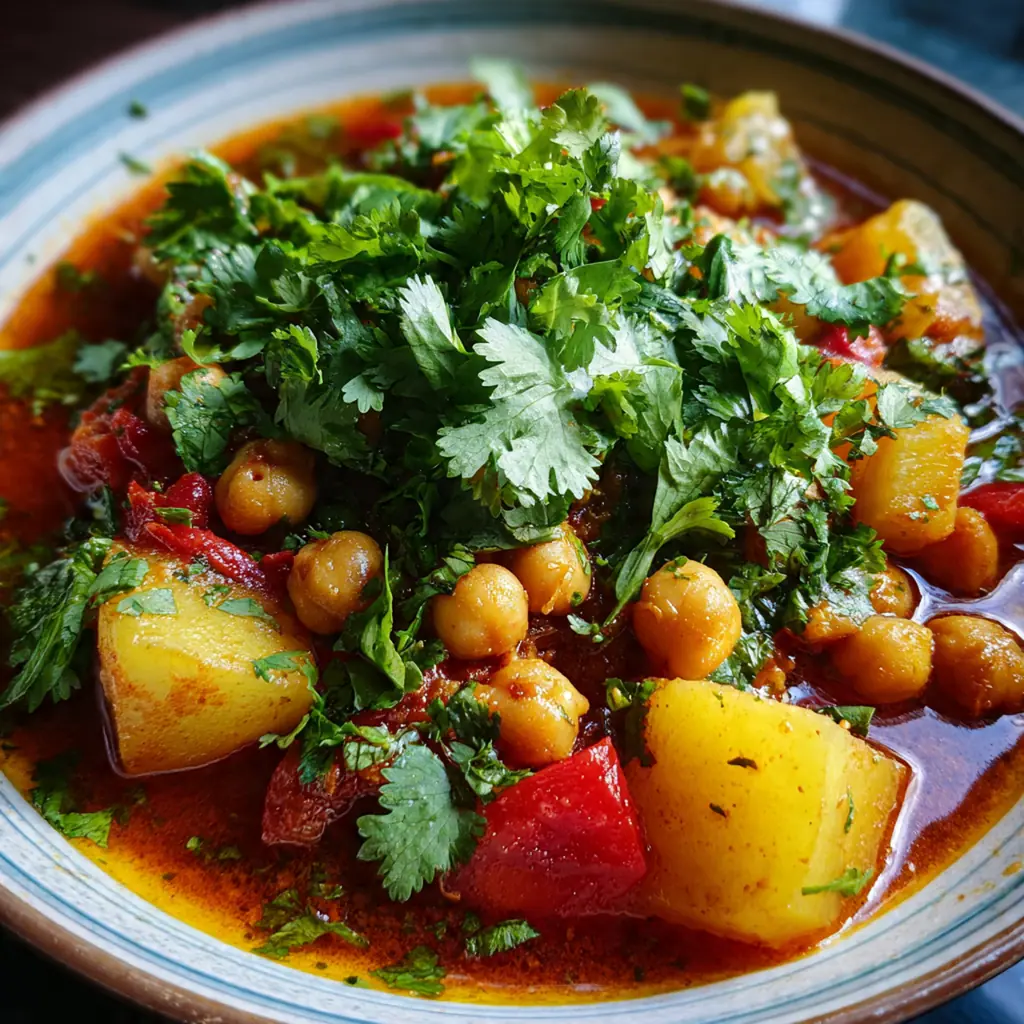
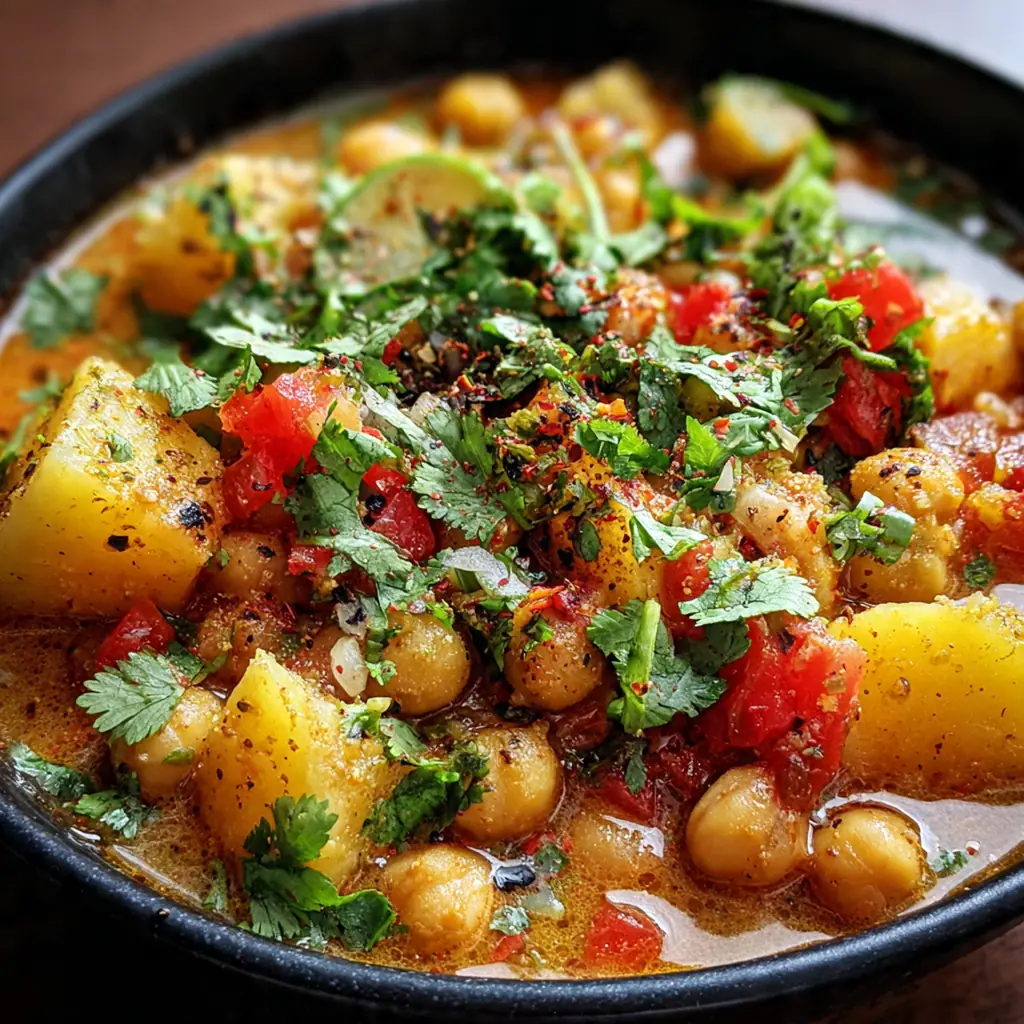
My weeknight Chickpea Potato Curry is the ultimate comfort food that tastes like it simmered for hours but comes together in under 45 minutes. Inspired by my friend’s mother’s traditional Indian home cooking, this one-pot wonder balances warm spices with creamy coconut milk and hearty vegetables. You get tender potatoes and protein-packed chickpeas swimming in a rich, golden sauce that smells absolutely incredible while it cooks. It’s become my go-to meal when I want something deeply satisfying that doesn’t keep me chained to the stove all evening.
Why You'll Love This Recipe
- Completely plant-based and naturally creamy without any dairy products at all
- One-pot meal means minimal cleanup and less time doing dishes
- Packed with protein from chickpeas and fiber from those satisfying potatoes
- Better than takeout and ready in under an hour from start to finish
- Makes excellent leftovers that taste even better the next day for lunch
Ingredients You’ll Need
- Coconut oil: high heat tolerance and subtle sweetness that complements the spices perfectly. Choose unrefined for more coconut flavor.
- Yellow onion: provides the aromatic base and natural sweetness when sautéed. Look for firm bulbs with dry, papery skins.
- Garlic: delivers pungent depth and savory complexity. Fresh cloves should feel firm and smell sharp.
- Ginger: adds bright, peppery warmth and freshness. Choose roots that feel firm with smooth skin.
- Curry powder: the flavor backbone bringing warm, complex spice notes. Buy from a store with good turnover for maximum freshness.
- Turmeric: gives earthy flavor and that gorgeous golden color. Look for bright orange-yellow powder without dullness.
- Cumin: adds warm, nutty depth to the spice blend. Whole seeds ground fresh are even better if you have them.
- Garam masala: brings sweet-spice complexity that makes the curry special. Check for a blend with cardamom and cinnamon.
- Cayenne pepper: optional heat booster for spice lovers. Start small since heat levels vary by brand.
- Russet potatoes: starchy texture that breaks down slightly to thicken the curry naturally. Choose firm ones without green spots.
- Chickpeas: protein powerhouse that makes this curry hearty and filling. Canned ones are convenient but rinse them well.
- Coconut milk: creates that luxurious creamy texture and rich mouthfeel. Full-fat gives the best results, don’t use light.
- Vegetable broth: adds savory depth and helps cook the potatoes. Homemade or low-sodium both work great.
- Salt: essential for bringing all the flavors together. Kosher salt dissolves easily and distributes evenly.
- Black pepper: adds subtle heat and complexity. Freshly ground has much better flavor than pre-ground.
- Fresh lemon juice: brightens all the flavors and cuts through the richness. Always use fresh, bottled loses its zing.
- Fresh cilantro: adds fresh, herbal finish and vibrant color. Look for bright green leaves without yellowing.
- Frozen peas: optional pop of sweetness and color. Add them in the last few minutes so they stay bright green.
- Fresh spinach: optional nutrient boost that wilts beautifully. Baby spinach works best and needs no chopping.
- Extra coconut milk: optional drizzle for even more creaminess and visual appeal. Shake the can well before using.
- Red pepper flakes: optional garnish for extra heat and texture. Sprinkle on just before serving if you like spice.
How to Make It
Heat the Coconut Oil:
Start by warming the coconut oil in your large heavy-bottomed pot or Dutch oven over medium heat for about 2 minutes until it shimmers. I love using my enameled cast iron pot here because it distributes heat so evenly and prevents any hot spots that could burn the spices.
Sauté the Aromatics:
Add your finely diced yellow onion to the shimmering oil and cook for 5-6 minutes, stirring occasionally until the pieces turn soft and translucent with golden edges. This slow caramelization builds the sweet foundation that makes your Chickpea Potato Curry taste like it simmered for hours.
Bloom the Garlic and Ginger:
Stir in the minced garlic and grated ginger, cooking for just 1 minute while stirring constantly until your kitchen smells absolutely incredible. This quick cooking removes the raw bite while keeping all that fresh, pungent flavor that makes the curry sing.
Toast the Spices:
Add the curry powder, turmeric, cumin, garam masala, and cayenne pepper, stirring constantly for 30 seconds to toast the spices. You’ll know it’s ready when the spices become super fragrant and smell nutty and warm instead of dusty and raw.
Coat the Vegetables:
Add your cubed potatoes and drained chickpeas, stirring well to coat everything evenly in that gorgeous spice mixture. Let them cook for 3-4 minutes to develop flavor and get a light coating on all the pieces before adding liquid.
Pour in the Liquids:
Pour in the full-fat coconut milk and vegetable broth, stirring to combine everything smoothly. Bring the mixture to a gentle boil, then immediately reduce to medium-low heat to keep things at a steady simmer.
Simmer to Tender Perfection:
Cover the pot and simmer for 15-18 minutes, stirring occasionally, until the potatoes are fork-tender. The timing depends on your potato size, so test a piece at 15 minutes and give it more time if needed.
Thicken the Sauce:
Uncover and continue simmering for 3-5 minutes to let the sauce reduce slightly. Use the back of a spoon to mash a few potato pieces against the pot side – this natural thickening trick creates an even creamier texture without adding anything extra.
Finish and Serve:
Remove from heat and stir in the lemon juice and fresh cilantro. Taste and adjust seasoning with more salt or pepper if needed, then let it rest covered for 2-3 minutes so all those flavors marry together beautifully.
Optional Additions:
If you’re using the optional frozen peas or fresh spinach, stir them in during the last 3-5 minutes of cooking. Peas need just a couple minutes to heat through, while spinach wilts almost immediately when added to the hot curry.
Final Resting Period:
Let the finished curry rest for 2-3 minutes off the heat with the lid on before serving. This brief rest allows the flavors to meld and the sauce to settle into its final creamy consistency that coats the back of a spoon perfectly.
You Must Know
- Cut your potatoes into uniform 1/2-inch cubes for even cooking throughout the entire batch.
- Don’t skip the lemon juice at the end – it brightens everything and cuts through the coconut…
- If your curry gets too thick while resting, add vegetable broth 1/4 cup at a time until you …
- For deeper flavor, let the finished curry sit covered for 10 minutes off heat before you ser…
- I always make extra because this Chickpea Potato Curry tastes even better the next day for l…
- The secret is in the spice-toasting step – that 30 seconds of blooming makes all the differe…
Storage Tips
Store your cooled Chickpea Potato Curry in airtight containers in the refrigerator for up to 5 days, making it perfect for meal prep throughout the week. For longer storage, freeze portions for up to 3 months in freezer-safe containers, leaving a little space at the top for expansion. When reheating, use gentle heat on the stovetop over medium-low and add a splash of vegetable broth if the sauce has thickened too much. I love that this curry actually improves overnight as the flavors continue to meld and deepen, so day two is often even better than fresh. Just reheat individual portions in the microwave if you’re in a hurry, stirring halfway through to ensure even heating.
Ingredient Substitutions
If you need to swap ingredients, this Chickpea Potato Curry is very forgiving. You can use any neutral oil instead of coconut oil, though you’ll lose that subtle coconut sweetness. Yukon gold potatoes work beautifully if you don’t have russets – they’ll hold their shape better while still breaking down enough to thicken the sauce. For the chickpeas, you could substitute white beans or even cubed tofu, though the texture will be slightly different. If coconut milk isn’t your thing or you have allergies, full-fat cashew cream or even heavy cream can work (though it won’t be vegan anymore). Fresh herbs like mint or parsley can stand in for cilantro if you’re one of those people who tastes soap when you eat cilantro. And for the spices, any good quality curry blend will work – just adjust the amount to your taste preference since blends vary in intensity.
Serving Suggestions
Serve this Chickpea Potato Curry over fluffy basmati rice or with warm naan bread for scooping up every last bit of that creamy sauce. I love garnishing mine with extra fresh cilantro, a squeeze of fresh lime juice, and a dollop of plain yogurt if I’m feeling fancy and not strictly vegan. A side of cucumber raita or kachumber salad provides a cool, crunchy contrast that balances the richness perfectly. For a complete Indian-inspired feast, add some simple roasted cauliflower or a quick lentil dal on the side. The curry also makes fantastic stuffed peppers or can be served over baked sweet potatoes for extra nutrition. On busy nights, I just spoon it over a bowl of quinoa or even whole wheat couscous.
Cultural Context
This Chickpea Potato Curry draws inspiration from traditional Indian home cooking, particularly from the northern regions where hearty, warming dishes are essential for cooler weather. While not a specific regional recipe, it captures the essence of everyday Indian family meals that prioritize balance, warmth, and nourishment over restaurant-style complexity. The technique of blooming spices in oil and finishing with fresh herbs and lemon juice reflects fundamental Indian cooking principles that have been passed down through generations. What makes this version special is how it adapts those traditional techniques for modern home cooks who need something quick yet authentic-tasting. The use of coconut milk nods to southern Indian influences while keeping the overall flavor profile accessible to Western palates. This is the kind of dish that Indian families might actually make on a Tuesday night – comforting, nutritious, and deeply satisfying without requiring hours of prep.
Pro Tips
- For extra depth, stir in 1 tablespoon of tomato paste when you add the spices – it adds umam…
- If you want restaurant-style creaminess, blend half a cup of the cooked chickpeas with some …
- Make sure to use a heavy-bottomed pot – it prevents scorching and gives you that even, gentl…
- Save some fresh cilantro for garnish rather than stirring it all in, because that bright pop…
- I always add an extra squeeze of fresh lemon right before serving to wake up all the flavors.
- The curry will thicken as it cools, so if planning ahead, stop simmering when it’s slightly …
Frequently Asked Questions
For this Chickpea Potato Curry, a medium curry powder provides the best balance of flavor without overwhelming heat. The recipe uses 2 tablespoons, which creates a rich, aromatic base. If you prefer mild flavor, reduce to 1.5 tablespoons, or add extra cayenne pepper if you like more heat. You can also use a combination of curry powder plus extra ground cumin and turmeric for more depth.
Absolutely! This Chickpea Potato Curry is perfect for meal prep. Let it cool completely, then store in airtight containers in the refrigerator for up to 5 days. The flavors actually deepen overnight. Reheat gently on the stovetop with a splash of vegetable broth or water to loosen the sauce. You can also freeze it for up to 3 months.
While full-fat coconut milk creates the creamy texture this Chickpea Potato Curry is known for, you have options. You can use light coconut milk for fewer calories, though the sauce will be thinner. For a dairy alternative, try cashew cream (blend soaked cashews with water) or soy milk mixed with a tablespoon of cornstarch to thicken. Avoid watery substitutes like almond milk as they won’t provide the same richness.
The Chickpea Potato Curry simmers for about 30 minutes total, but check your potatoes at the 25-minute mark. Pierce a potato cube with a fork—it should slide off easily without resistance. The cubes should be tender but still hold their shape. If they’re still firm, continue simmering for 5 more minutes and check again. Small 1/2-inch cubes cook faster than larger pieces.
This Indian-inspired dish pairs beautifully with basmati rice, brown rice, or warm naan bread to soak up the creamy coconut sauce. For a complete meal, serve alongside cucumber raita, a simple side salad, or roasted vegetables. It’s also delicious over quinoa for extra protein. Garnish with fresh cilantro and a squeeze of lemon juice to brighten all the flavors.