

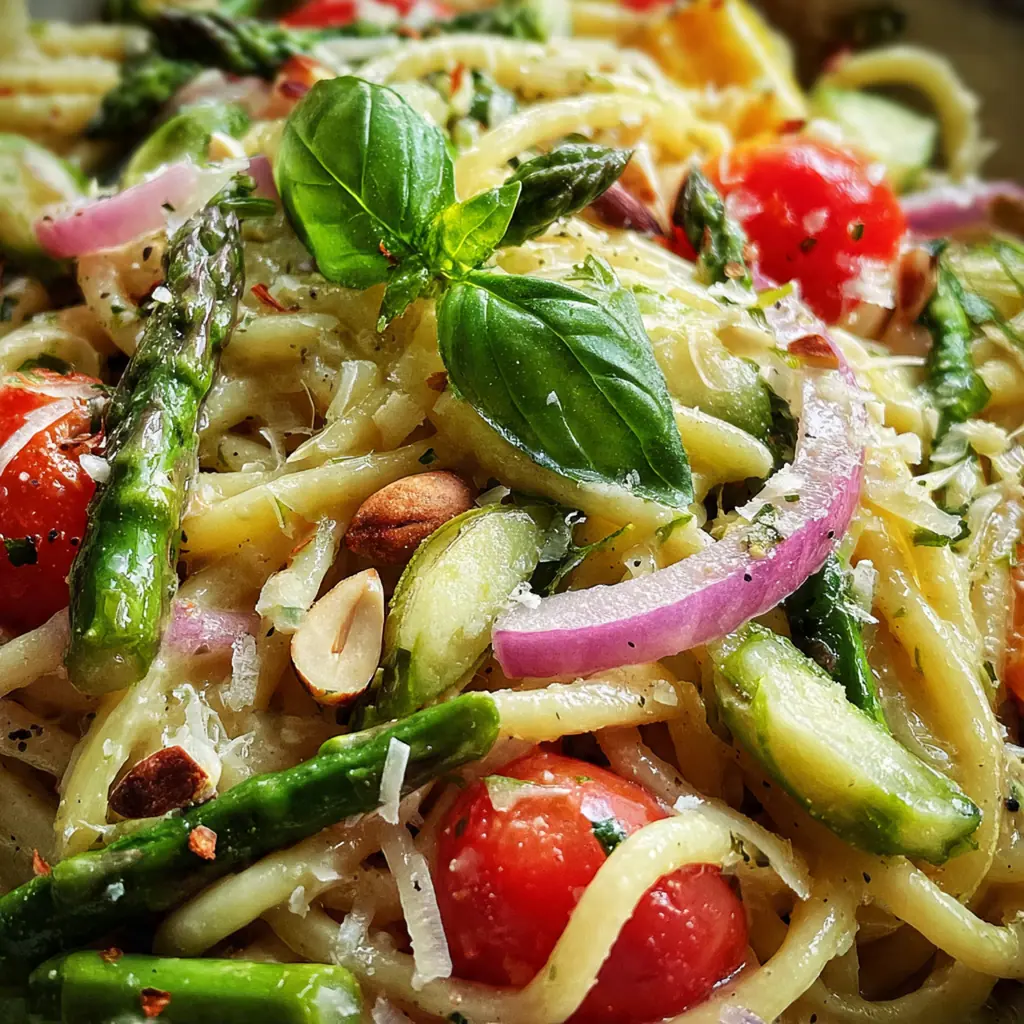
This bright asparagus pasta salad comes together in just 35 minutes and tastes like spring in every bite. I created this recipe to highlight fresh seasonal asparagus paired with a zesty lemon-herb vinaigrette that makes everything pop. The combination of tender-crisp vegetables and perfectly cooked fusilli creates a satisfying dish that works as a side or light main. It’s the kind of simple, honest Italian-inspired cooking that lets quality ingredients shine without complicated techniques.
Why You'll Love This Recipe
- Fresh seasonal asparagus provides peak flavor and nutrition in every forkful
- The zesty lemon-herb vinaigrette brightens the entire dish without overpowering it
- Comes together in under 35 minutes, perfect for busy weeknights or last-minute potlucks
- Leftovers taste even better the next day as the flavors meld and deepen
- Works warm, chilled, or at room temperature so you can serve it however you like
- I keep this recipe in heavy rotation during asparagus season because it’s always a crowd-ple…
Ingredients You’ll Need
- Fresh asparagus spears: Look for bright green stalks with tightly closed tips that snap when bent. This spring vegetable brings a grassy freshness that defines the entire salad.
- Fusilli or rotini pasta: These spiral shapes trap the dressing and small vegetable pieces beautifully. Choose a brand that cooks to al dente so it holds up in the salad.
- Extra virgin olive oil: The foundation of your dressing, so splurge on a good quality bottle. It should taste fruity and slightly peppery, not bitter or rancid.
- Fresh lemon juice: Never use bottled here—freshly squeezed lemon provides the bright acidity that makes this salad sing. You’ll need about two juicy lemons.
- Garlic: Fresh cloves minced finely will infuse the dressing without overwhelming bites. Avoid pre-minced jars which often taste bitter.
- Dijon mustard: This emulsifier helps bind the oil and lemon juice while adding subtle tang. A teaspoon goes a long way in balancing the flavors.
- Salt and black pepper: Simple seasonings that elevate every other ingredient. Use kosher salt and freshly ground black pepper for best results.
- Fresh basil leaves: Tear them by hand to prevent bruising and release aromatic oils. Look for vibrant green leaves without dark spots or wilting.
- Fresh parsley: Chopped flat-leaf parsley adds a clean, bright note. It’s more flavorful than curly parsley and blends seamlessly into the dish.
- Grated Parmesan cheese: Adds savory depth and creaminess. Buy a wedge and grate it yourself for superior flavor over pre-grated options.
- Toasted pine nuts: These buttery nuts provide crunch and richness. Toast them yourself in a dry skillet until golden and fragrant for maximum flavor.
- Cherry tomatoes: Halved for bursts of juicy sweetness and color. Choose firm, ripe tomatoes that feel heavy for their size.
- Red pepper flakes: Optional for those who like a gentle heat that contrasts with the bright citrus notes. Add sparingly to taste.
- Lemon zest: Extra zest in the dressing or as garnish intensifies the citrus flavor without adding more acidity. Use a microplane for fine, fluffy zest.
- Additional Parmesan: More cheese for serving lets guests add extra savory umami if desired. A cheese grater at the table is a nice touch.
- Arugula: Optional peppery greens add freshness and serve as a bed for the salad. Look for young, tender leaves rather than mature bitter ones.
How to Make It
Prepare the Asparagus:
Start by snapping off the woody ends of your asparagus spears—typically the bottom 1-2 inches. You can do this by lining them up on your cutting board and cutting with a knife, or by holding each spear and snapping it naturally where it breaks. Trim the remaining spears into 1-inch pieces. These bite-sized chunks will cook evenly and mix perfectly with the pasta shapes.
Boil the Pasta:
Bring a large pot of generously salted water to a rolling boil. Add your fusilli or rotini and cook according to package directions, usually 10-12 minutes for al dente. The salt seasons the pasta from the inside out, so don’t skimp—it should taste like the sea.
Add the Asparagus:
During the last 3 minutes of pasta cooking time, add your asparagus pieces directly to the boiling water. This timing is crucial—the asparagus will become tender-crisp and bright green without getting mushy. The pasta and vegetables finish cooking together perfectly.
Make the Dressing:
While everything cooks, whisk together olive oil, fresh lemon juice, minced garlic, Dijon mustard, salt, and black pepper in a small bowl or jar. Shake or whisk vigorously until the mixture emulsifies and looks slightly thickened. This zesty vinaigrette is what makes this asparagus pasta salad special.
Drain and Cool:
Reserve 1/2 cup of the starchy pasta cooking water before draining everything in a colander. Rinse briefly under cold water to stop the cooking process and cool the mixture down. This prevents the pasta from continuing to cook and keeps the vegetables crisp.
Combine Ingredients:
Transfer the drained pasta and asparagus to a large mixing bowl. Add the halved cherry tomatoes, torn basil, chopped parsley, and toasted pine nuts. The mixture should already smell incredible with all those fresh herbs and pine nuts.
Toss with Dressing:
Pour the lemon-herb vinaigrette over the warm pasta mixture. Toss gently but thoroughly to coat everything evenly. The warm pasta absorbs the flavors beautifully, creating a cohesive taste throughout every bite.
Add Parmesan and Adjust:
Stir in the grated Parmesan cheese and toss again. If the salad seems too dry, add a splash of the reserved pasta water to loosen it up. The starchy water helps the dressing cling to every noodle and vegetable.
Let Flavors Meld:
Let the salad rest for 5-10 minutes at room temperature. This allows the flavors to marry and deepen. Taste and adjust seasoning with more salt, pepper, or lemon juice as needed. Everyone’s palate is different—make it perfect for you.
Serve or Store:
Enjoy at room temperature or chilled from the refrigerator. If making ahead, cover and refrigerate, but always bring it to room temperature before serving. The flavors develop beautifully overnight, making this an excellent make-ahead dish for busy cooks.

You Must Know
- The asparagus should remain bright green and slightly crisp for best texture
- Toast pine nuts carefully—they burn easily and turn bitter in seconds
- Fresh herbs make all the difference; save half to add just before serving if making ahead
- I learned the hard way that overcooking asparagus turns it mushy and dull. The brief boil ke…
Storage Tips
Store your asparagus pasta salad in an airtight container in the refrigerator for up to four days, and actually, the flavors improve after a day as everything melds together beautifully. If the pasta absorbs too much dressing overnight, simply stir in a tablespoon of olive oil or fresh lemon juice before serving to revive that silky, fresh-tasting coating. I find this dish makes fantastic lunches throughout the week since it never gets soggy or loses its appeal.
Ingredient Substitutions
If you’re avoiding dairy, simply omit the Parmesan entirely or use nutritional yeast for a cheesy, savory flavor without the dairy. For nut allergies, swap the pine nuts for toasted sunflower seeds or just leave them out—the salad still has plenty of texture and flavor. Gluten-free pasta works perfectly here; just cook it according to package directions and add the asparagus during the last few minutes as the cooking times vary. If fresh herbs aren’t available, use about one-third the amount of dried basil and parsley, but add them to the dressing to rehydrate.
Serving Suggestions
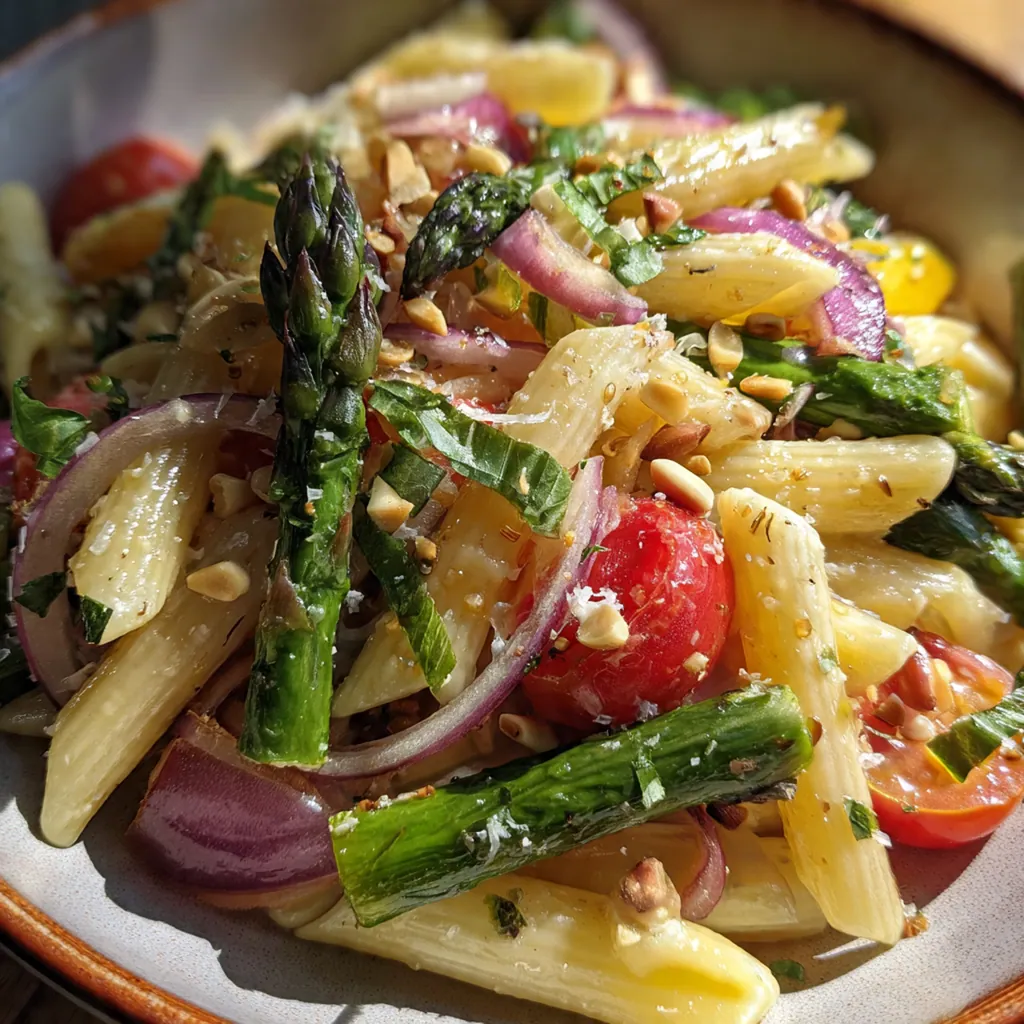
This vibrant asparagus pasta salad pairs beautifully with simply grilled chicken, salmon, or even a steak for a complete meal. It’s perfect for picnics and potlucks since it tastes delicious at room temperature. Serve it alongside a crusty baguette to soak up any remaining dressing, and pour a glass of crisp Sauvignon Blanc or Pinot Grigio to complement those bright citrus and herbal notes. For a vegetarian spread, pair it with roasted chickpeas and a simple green salad.
Cultural Context
This asparagus pasta salad draws inspiration from Italian springtime cooking, where asparagus is celebrated during its short season and tossed with simple, fresh ingredients. In Northern Italy, you’ll find similar dishes where seasonal vegetables are paired with good olive oil and bright citrus to create light, flavorful meals. The technique of boiling pasta and vegetables together is a time-honored method that ensures perfect texture while conserving water and energy. It’s the kind of everyday cooking that turns humble ingredients into something truly special without any fuss.
Pro Tips
- Don’t overcook the asparagus—it should remain bright green and slightly crisp for the best t…
- Toast pine nuts in a dry skillet over medium heat for 3-4 minutes until golden, watching clo…
- Use a microplane to add fresh lemon zest to the dressing for an extra pop of citrus flavor t…
- If making ahead, reserve half the fresh herbs to add just before serving for vibrant color a…
- The dressing can be made up to 3 days in advance and stored in the refrigerator—just give it…
- I always keep extra dressing ready in the fridge since it works on everything from green sal…
Frequently Asked Questions
Fusilli or rotini are ideal for asparagus pasta salad because their spiral shapes catch the lemon-herb vinaigrette beautifully. The ridges hold onto the fresh basil, parsley, and grated Parmesan cheese, ensuring every bite is flavorful. Avoid long pasta like spaghetti which won’t hold the vegetables and dressing as effectively.
Yes, you can prepare Asparagus Pasta Salad up to 24 hours ahead. Cook the pasta and asparagus, then toss with the vinaigrette and refrigerate. Add the fresh basil, parsley, and toasted pine nuts just before serving to maintain their bright flavor and crisp texture. The salad keeps well for 2-3 days total.
While asparagus is the star, you can substitute with broccoli florets or fresh green beans for a similar spring vibe. For a completely different twist, try roasted bell peppers or blanched sugar snap peas. If using broccoli, cut it small and blanch briefly like the asparagus to keep that tender-crisp texture.
The asparagus is ready when it turns bright green and becomes tender-crisp, usually after 2-3 minutes in boiling water. Pasta should be al dente with a slight bite. For the vinaigrette, whisk until the Dijon mustard fully emulsifies with the olive oil and lemon juice. The toasted pine nuts should be golden and fragrant.
Asparagus Pasta Salad is versatile and complements Italian-inspired dishes beautifully. Serve it alongside grilled chicken, fish, or steak for a light main meal. It’s also perfect as a side dish for Easter, spring potlucks, or picnic gatherings. Pair with a crisp white wine and crusty bread for a complete spring feast.