

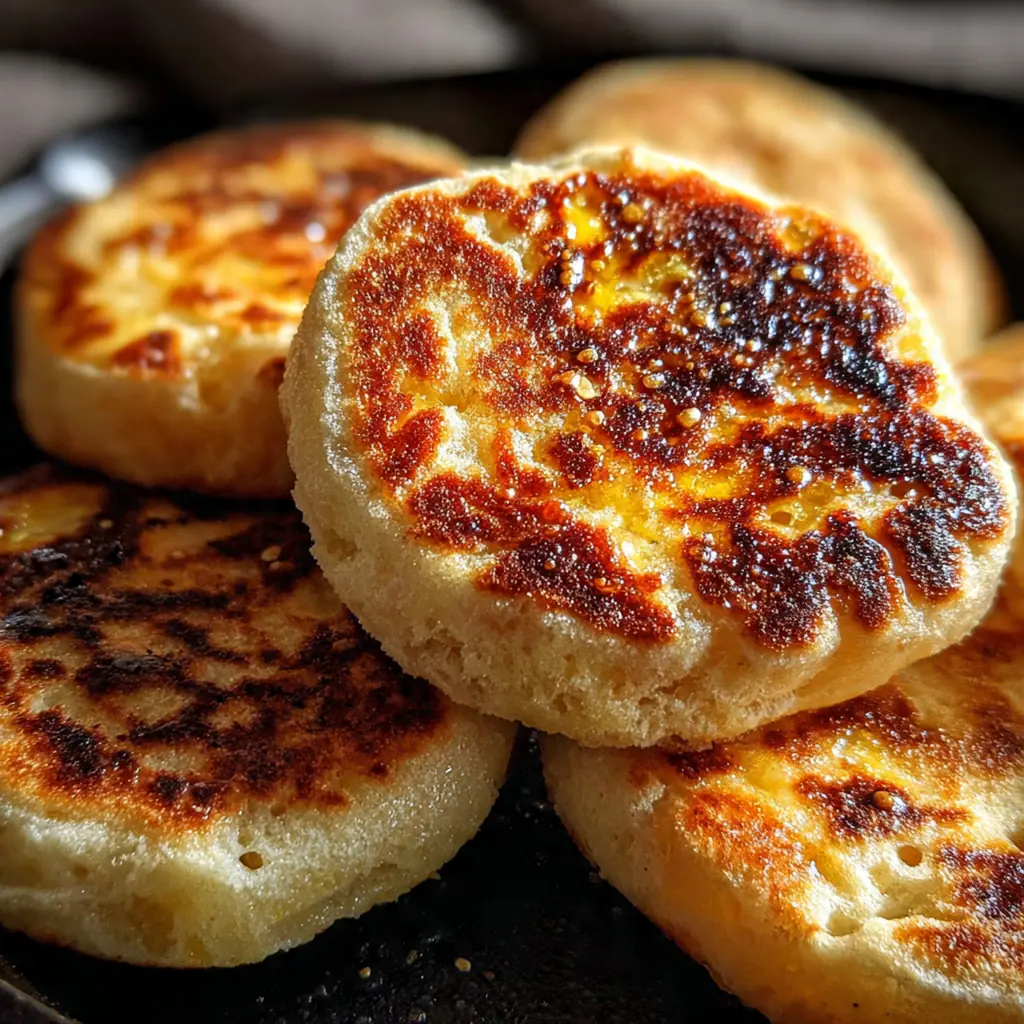
This sourdough crumpets recipe brings the authentic taste of a British bakery right into your kitchen, using up that discard you hate to waste. These griddle cakes are wonderfully chewy with signature holes on top that make them perfect for soaking up melted butter and honey. I first fell in love with them during a trip to London, and now I make them every weekend. The tangy flavor from the fermented starter is what makes these truly special.
Why You'll Love This Recipe
- They turn leftover starter discard into crispy, golden breakfast stars with zero waste.
- No commercial yeast needed, just the natural power of your fermented starter.
- Those little holes catch every drop of butter and jam like magic.
- Your whole house will smell like a rustic European bakery.
- I make big batches and freeze them for busy weekday mornings.
Ingredients You’ll Need
- Active sourdough starter: Use unfed discard straight from the jar for that signature tangy depth and effortless rise.
- All-purpose flour: Provides the structure and chew while letting the sourdough flavor shine through.
- Warm water: Activates the starter and creates the ideal batter consistency for those holey crumpets.
- Fine sea salt: Enhances the fermented flavor and balances the natural sourness perfectly.
- Baking soda: The chemical boost that creates the essential airy texture and iconic bubbles.
- Granulated sugar: Just a touch to feed the reaction and round out the sharp notes.
- Unsalted butter: Melted for cooking, giving a rich flavor and golden crust.
- Vegetable oil: For greasing the rings, ensuring your crumpets release cleanly every time.
- Honey: An optional addition to the batter for subtle sweetness that complements the tang.
- Clotted cream: Traditional topping option for an ultra-rich, luxurious serving experience.
- Your favorite jam: For spreading on the warm crumpets, adding fruity sweetness to every bite.
How to Make It
Mix the Starter Base:
In a large glass bowl, whisk together the sourdough starter, warm water, and all-purpose flour until completely smooth and no lumps remain. Cover loosely with a clean kitchen towel and let rest at room temperature for 6-8 hours or overnight. The batter should become bubbly and slightly puffy, developing that distinct sourdough tang.
Check the Consistency:
After the fermentation period, stir the batter gently. It should be thick but pourable, similar to pancake batter. If it seems too thick, add 1-2 tablespoons of warm water. If it’s too thin, add a tablespoon of flour. Getting this texture right is key to proper crumpet structure.
Preheat Your Pan:
Preheat a large cast-iron skillet or griddle over medium-low heat to about 325°F. The pan should be warm but not smoking hot. Consistent, moderate heat ensures your crumpets cook through without burning the bottoms before the centers set.
Activate the Batter:
Stir the salt, baking soda, and sugar directly into the fermented batter. Mix just until combined—you’ll see immediate bubbling and the batter will become airy and light. This chemical reaction is what creates the signature crumpet holes, so don’t overmix once you add the soda.
Prepare the Rings:
Lightly grease your crumpet rings or clean, empty tuna cans with vegetable oil. Place the rings onto the preheated skillet and brush the insides with oil too. Let them heat for 2 minutes so the oil is shimmering. This step prevents sticking and helps form a crisp edge.
Fill the Rings:
Fill each ring about 2/3 full with batter (approximately 1/4 cup per crumpet). Don’t overfill or they’ll overflow and spread. The batter should sizzle gently when it hits the pan—a sound that tells you you’re on the right track.
Cook the First Side:
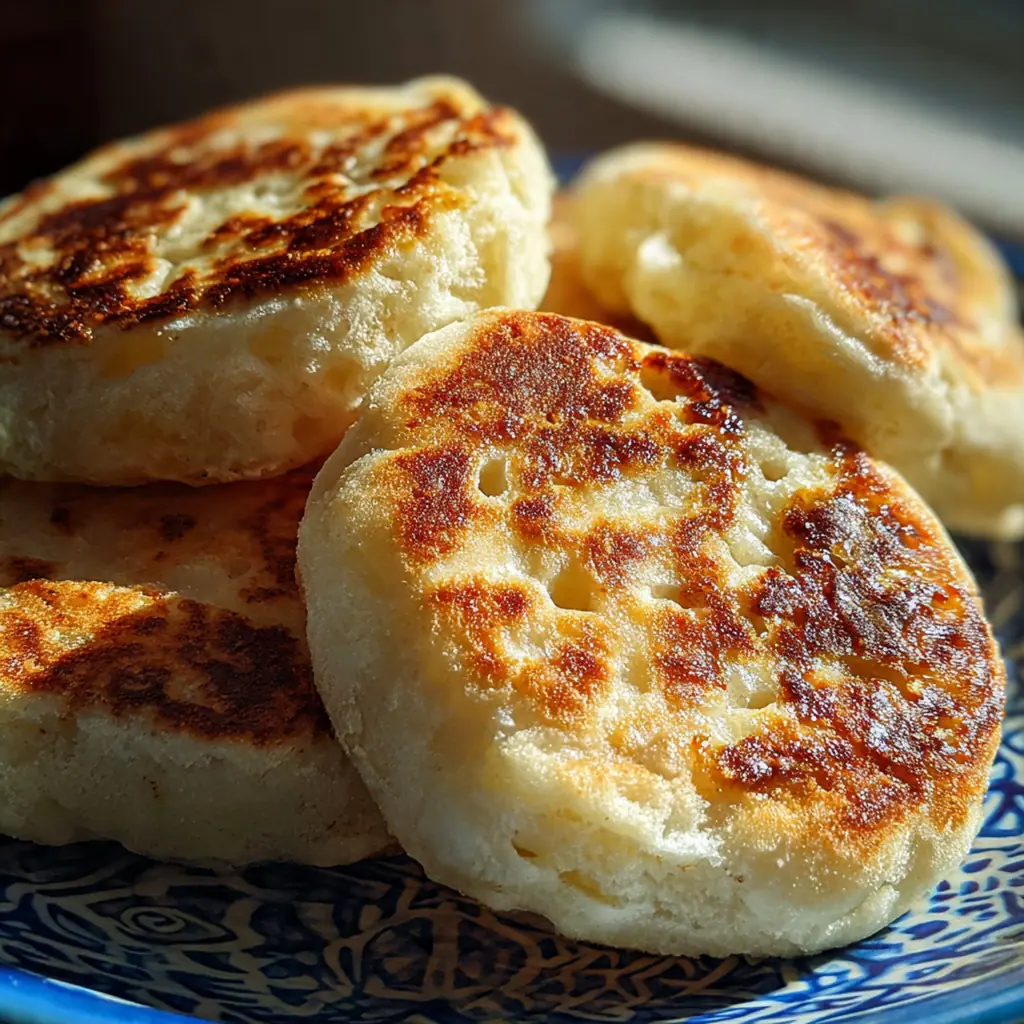
Cook for 6-8 minutes until the tops are covered with holes and the surface looks dry and set. The edges should be pulling away slightly from the rings. You’ll see beautiful holes have formed across the top—this is the classic crumpet look. Don’t flip them during this stage.
Release and Flip:
Using tongs, carefully lift off the rings. If they stick, run a thin knife around the edge. Flip the crumpets and cook for 2-3 minutes more until golden brown on both sides. This final browning creates a crispy exterior that contrasts with the tender inside.
Cool and Serve:
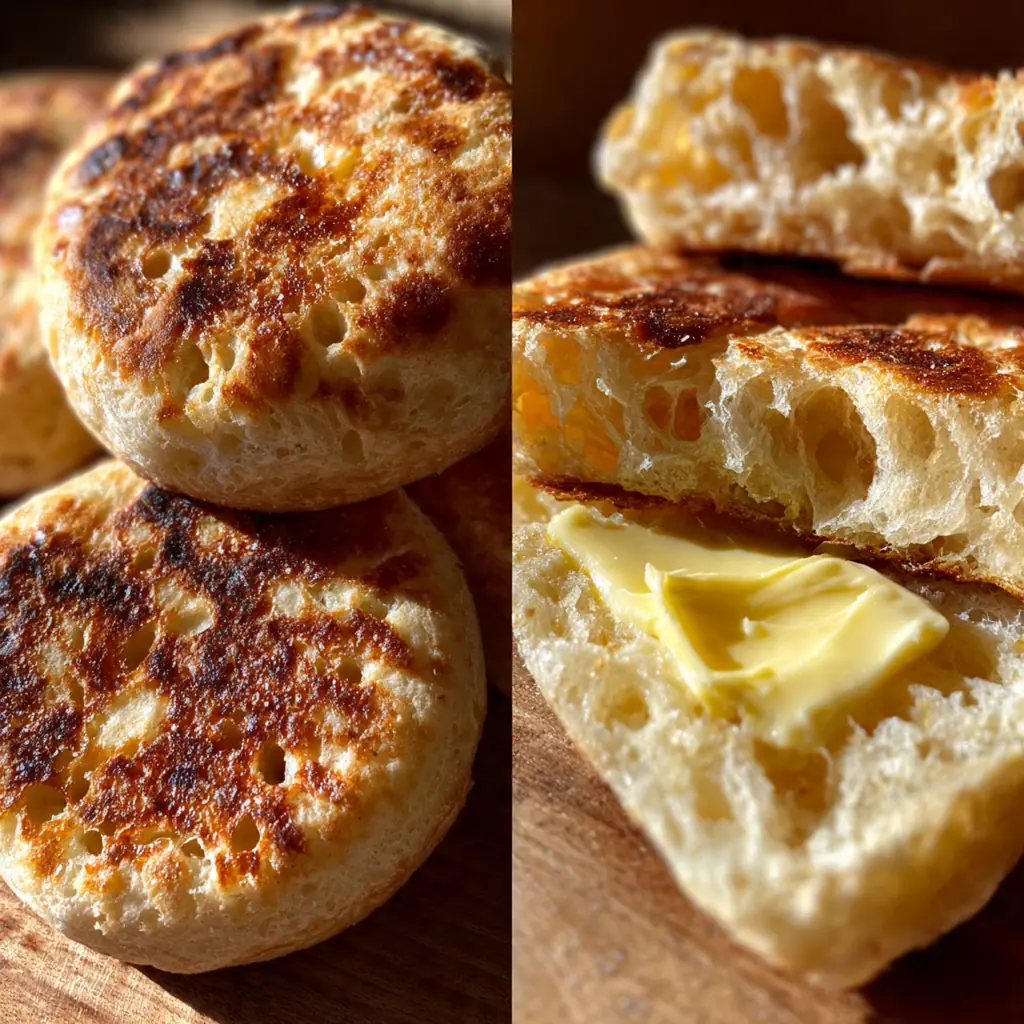
Transfer cooked crumpets to a wire rack and let cool slightly. For the crispiest texture, split them horizontally with a fork while still warm. Serve immediately with generous amounts of butter, clotted cream, and your favorite jam. The warm crumpets will melt the butter beautifully into every nook.
You Must Know
- Fresh baking soda is non-negotiable—it’s the engine behind those signature holes.
- Medium-low heat is your friend; too hot and you’ll burn the bottoms.
- Let the batter ferment the full time for maximum tang and texture.
- I always save a little batter to make mini crumpets when my rings are too big.
- Never skip the fork-splitting—it creates the perfect surface area for butter.
Storage Tips
Once your sourdough crumpets have cooled completely, store them in an airtight container at room temperature for up to 2-3 days. For longer storage, freeze them in a single layer first so they don’t stick together, then transfer to freezer bags where they’ll keep for about 3 months. The toaster is your best friend for reheating—just pop them in on medium heat for a couple of minutes until the edges get crispy and the centers warm through. A toaster oven or dry skillet works great too, but skip the microwave if you want to maintain any texture.
Ingredient Substitutions
If you don’t have all-purpose flour, you can use bread flour for an even chewier texture, though all-purpose is traditional. For a gluten-free version, a 1:1 gluten-free flour blend works, but expect a slightly more tender crumpet that may not hold as many holes. Plant-based butter works fine for cooking if you’re dairy-free, and you can brush the rings with olive oil instead of vegetable oil. If you’re out of honey, a tiny drizzle of maple syrup in the batter adds similar sweetness.
Serving Suggestions
Keep it classic British by slathering your warm crumpets with salted butter and a generous spoonful of thick strawberry jam. For a truly decadent treat, add a dollop of clotted cream on top—the contrast with the warm, slightly crispy edge is heavenly. Smoked salmon with a smear of cream cheese makes an elegant savory option for brunch. I also love topping them with a poached egg and hollandaise sauce for a homemade crumpet eggs Benedict. On cozy evenings, simply toast them and top with sharp cheddar and a crack of black pepper.
Cultural Context
Crumpets are a cornerstone of British breakfast culture, dating back to the 17th century as a staple in teatime rituals across the UK. Unlike American pancakes or English muffins, their unique hole-filled surface is designed specifically to soak up the maximum amount of butter and tea-infused spreads. The tangy sourdough version honors the ancient art of fermentation before commercial yeast became common, giving each bite a depth of flavor that modern quick breads lack. Making them feels like participating in a centuries-old morning tradition that’s all about simple ingredients and unhurried enjoyment.
Pro Tips
- Your starter’s hydration level matters—100% hydration gives the perfect consistency without …
- If your kitchen is cool, extend fermentation to 8 hours or overnight for superior flavor dev…
- A cast-iron skillet retains heat best, ensuring those crumpets cook evenly without cold spots.
- I always make a double batch; these freeze so well for future lazy weekends.
- Don’t be afraid of sticky batter—it’s supposed to be thick, not runny like pancake batter.
- When I first started making sourdough crumpets, I learned that patience with fermentation ma…
Frequently Asked Questions
Yes, you can use active starter, but this recipe is specifically designed for unfed discard. Active starter is already risen and vigorous, which might create too much gas too quickly. If you use active starter, you may need to reduce the rising time or the amount of baking soda to prevent them from collapsing. Stick to discard for the most reliable results.
The baking soda reacts with the acidic components in the sourdough discard to create immediate carbon dioxide bubbles. This guarantees the crumpets rise and form those signature holes on top, even if your discard isn’t super active. It provides the lift that active yeast would normally provide in a standard crumpet recipe.
The recipe calls for warm water at about 85°F. This temperature is crucial for the baking soda reaction. Water that is too hot will activate the soda too fast and lose its lifting power before the batter sets. Water that is too cold won’t react quickly enough. An 85°F temperature creates the perfect environment for the batter to hold its bubbles.
Visual cues are key. Wait until the top of the batter is set and looks dry with a matte finish, rather than shiny and wet. You should see several bubbles popped on the surface, creating the classic crumpet holes. The edges should look slightly golden and pulled away from the rings. This usually takes about 5-7 minutes on medium-low heat.
Since these are a British staple, the classic pairing is plenty of salted butter melting into the holes. For a sweet treat, drizzle with honey or golden syrup. For a savory twist, try them with sharp cheddar or Marmite. They also pair wonderfully with a full English breakfast or afternoon tea.