


Creamy Salmon Spinach Pasta is the answer to your busiest weeknights when you crave something elegant yet effortless. This Italian-American main course brings together tender salmon flakes and fresh spinach in a silky garlic parmesan sauce that clings to perfectly cooked fettuccine. I’ve been making versions of this dish for years because it transforms simple pantry staples into something that feels restaurant-quality. The white wine and lemon zest cut through the richness beautifully, making every bite balanced and bright without being heavy.
Why You'll Love This Recipe
- The salmon stays incredibly tender by searing it separately and adding it at the end
- Fresh spinach wilts into the creamy sauce adding nutrition without bitterness
- White wine and lemon brighten the rich sauce perfectly
- One-pan sauce means easy cleanup
- Looks elegant enough for guests but simple enough for Tuesday night
Ingredients You’ll Need
- Dried fettuccine or linguine: These long pasta shapes hold the creamy sauce perfectly. Choose high-quality bronze-die pasta for the best texture.
- Skinless salmon fillet: Fresh, bright-colored fillets without skin give you the smoothest sauce. Look for firm flesh with a clean ocean scent.
- Fresh baby spinach: Tender leaves wilt quickly without bitterness. Pick vibrant green bunches with no yellowing edges.
- Olive oil: A good extra virgin olive oil adds fruity depth to the seared salmon and aromatics.
- Garlic: Fresh cloves provide the best aromatic base. Minced finely so it distributes evenly in the sauce.
- Shallot: Milder and sweeter than onion, it creates a delicate foundation for the sauce without overpowering the salmon.
- Dry white wine: Pinot Grigio or similar crisp wine deglazes the pan and adds acidity. Use something you’d enjoy drinking.
- Heavy cream: The backbone of the silky sauce. Full-fat creates the richest texture that coats every noodle.
- Reserved pasta cooking water: Starchy liquid is the secret to binding the sauce to the pasta. Never skip this step.
- Freshly grated Parmesan cheese: Grate your own from a block for superior melting and flavor. Pre-shredded contains anti-caking agents.
- Lemon: Both zest and juice brighten the entire dish. The citrus cuts through the creaminess and enhances the salmon.
- Red pepper flakes: A pinch adds subtle heat that wakes up the other flavors without being spicy.
- Salt and black pepper: Essential seasoning layers. Use freshly cracked pepper for the best aroma.
- Fresh dill: This delicate herb complements salmon perfectly. Chop just before using for maximum freshness.
- Toasted pine nuts: Optional but highly recommended for buttery crunch and texture contrast.
- Extra Parmesan: For finishing each bowl with extra umami richness.
- Lemon wedges: Serve on the side so everyone can add more brightness to their liking.
How to Make It
Boil the Pasta:
Bring a large pot of salted water to a rolling boil. Add the fettuccine and cook until al dente according to package directions. Before draining, scoop out half a cup of the starchy cooking water and set it aside — this liquid gold will help your sauce cling to every noodle.
Sear the Salmon:
While the pasta cooks, season your cubed salmon with salt and pepper. Heat one tablespoon of olive oil in a large skillet over medium-high heat until shimmering. Add the salmon and sear for 3-4 minutes, turning occasionally until just cooked through and opaque. Remove it to a plate immediately to prevent overcooking.
Sauté the Aromatics:
In the same skillet, add the remaining olive oil and reduce heat to medium. Toss in the diced shallot and sauté for 2 minutes until softened and translucent. This builds the flavor foundation for your creamy sauce.
Add Garlic and Heat:
Stir in the minced garlic and red pepper flakes, cooking for just 1 minute until fragrant. Stir constantly because garlic burns quickly and turns bitter. You want it golden and aromatic.
Deglaze with Wine:
Pour in the white wine to deglaze the pan, scraping up all those delicious browned bits from the bottom. Let it simmer for 2-3 minutes until reduced by about half. This concentrates the flavor and cooks off the alcohol.
Make the Cream Sauce:
Reduce heat to low and stir in the heavy cream. Let it gently simmer for 2 minutes to thicken slightly. Gradually whisk in the grated Parmesan cheese until completely melted and smooth. Keep the heat low to prevent the cheese from clumping.
Wilt the Spinach:
Add the fresh baby spinach to the sauce in batches, stirring until each batch wilts down. This takes about 2-3 minutes total. Season the sauce with salt and pepper to taste. The spinach adds nutrition without any bitterness.
Combine Pasta and Sauce:
Toss the cooked pasta directly into the skillet with the sauce. Add the reserved pasta water, two tablespoons at a time, tossing until the sauce coats the noodles beautifully. The starch creates a silky emulsion.
Finish with Salmon:
Gently fold in the cooked salmon cubes, lemon zest, lemon juice, and fresh dill. Cook for just 1 more minute to heat everything through and marry the flavors. This keeps the salmon tender and flaky.
Serve Immediately:
Divide into warmed bowls right away. Top with extra Parmesan, toasted pine nuts if using, and a final sprinkle of fresh dill. The dish is best enjoyed while hot.
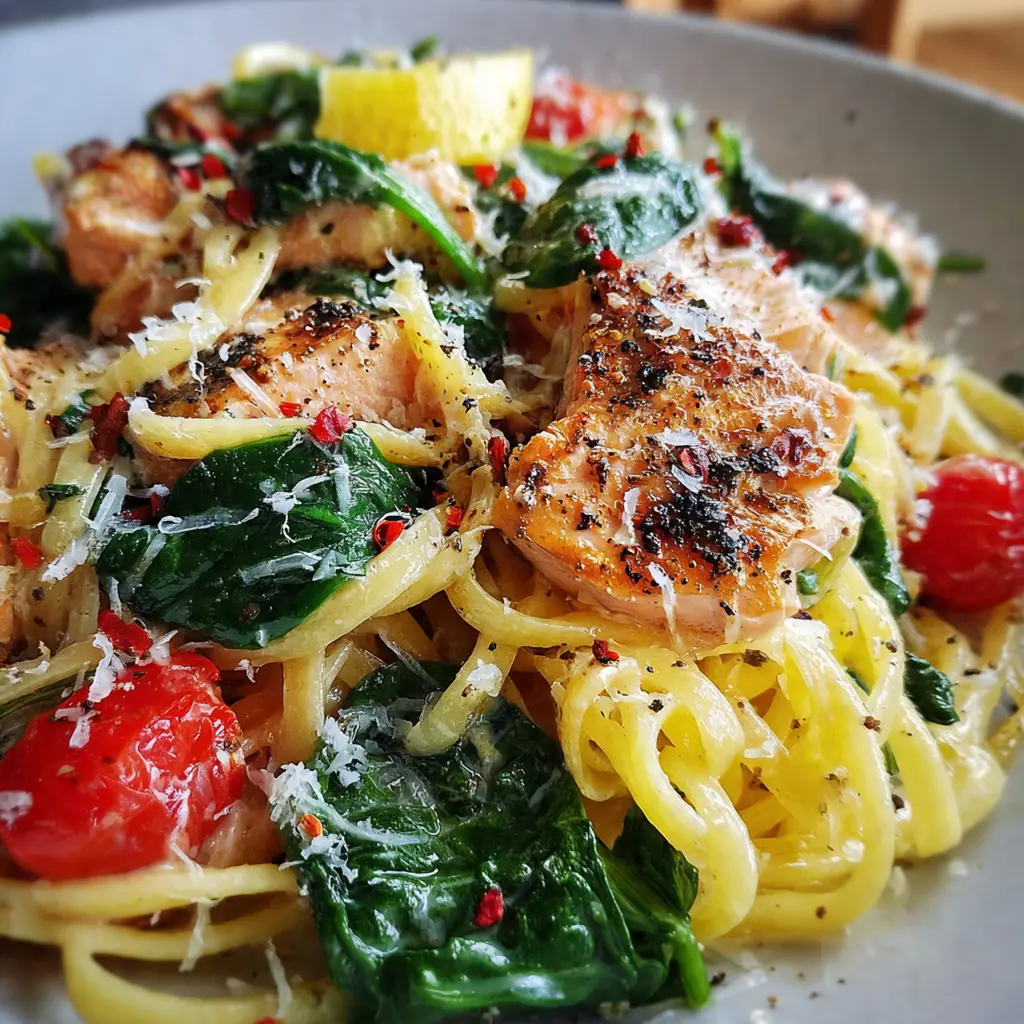
You Must Know
- Use skinless salmon for a smoother sauce texture
- Grate your own Parmesan for better melting
- Keep the heat low when adding cheese
- Add the salmon at the very end to prevent overcooking
- If the sauce gets too thick, add more pasta water
- I learned these tricks after making this dish dozens of times. The extra minute of whisking …
Storage Tips
Store any leftover creamy salmon spinach pasta in an airtight container in the refrigerator for up to 2 days. Reheat it gently in a skillet over low heat with a splash of milk or cream to loosen the sauce back up — the pasta will absorb moisture while sitting. I usually add a fresh sprinkle of dill and lemon juice to brighten it up. Avoid microwaving if you can, as the salmon can become rubbery and the sauce may separate. If you must use the microwave, heat in 30-second bursts, stirring between each, and add a tiny bit of cream or water.
Ingredient Substitutions
If salmon isn’t available, arctic char or trout work beautifully with identical cooking times, while flaky white fish like cod or halibut will cook a minute faster. For the pasta, any long shape works — tagliatelle or pappardelle hold the creamy sauce wonderfully, and you can swap in gluten-free pasta without issues. Fresh dill can be replaced with parsley, chives, or even a bit of tarragon if that’s what you have. If you’re avoiding dairy, use full-fat coconut cream instead of heavy cream and nutritional yeast or a vegan Parmesan alternative for the cheese — though the flavor profile will shift slightly.
Serving Suggestions
I love serving this pasta alongside a simple arugula salad tossed with lemon vinaigrette and shaved Parmesan — the peppery greens cut through the richness beautifully. Warm garlic bread is perfect for scooping up any extra sauce clinging to the bowl. Roasted asparagus or broccoli adds color and nutrition to the plate. For wine, a crisp Pinot Grigio or Sauvignon Blanc echoes the lemon and white wine in the sauce, creating a cohesive meal that feels special without being fussy.
Cultural Context
This creamy salmon spinach pasta is a beautiful example of Italian-American cooking, where classic Italian techniques meet accessible American ingredients. While traditional Italian pasta dishes often focus on simplicity with few components, American home cooks have embraced creamy sauces with proteins like salmon. The use of white wine, garlic, and Parmesan nods to Italian roots, while the generous cream and spinach combination feels very New World. It’s a dish that’s become a weeknight staple because it delivers restaurant-quality flavors using techniques that are straightforward enough for any home cook.
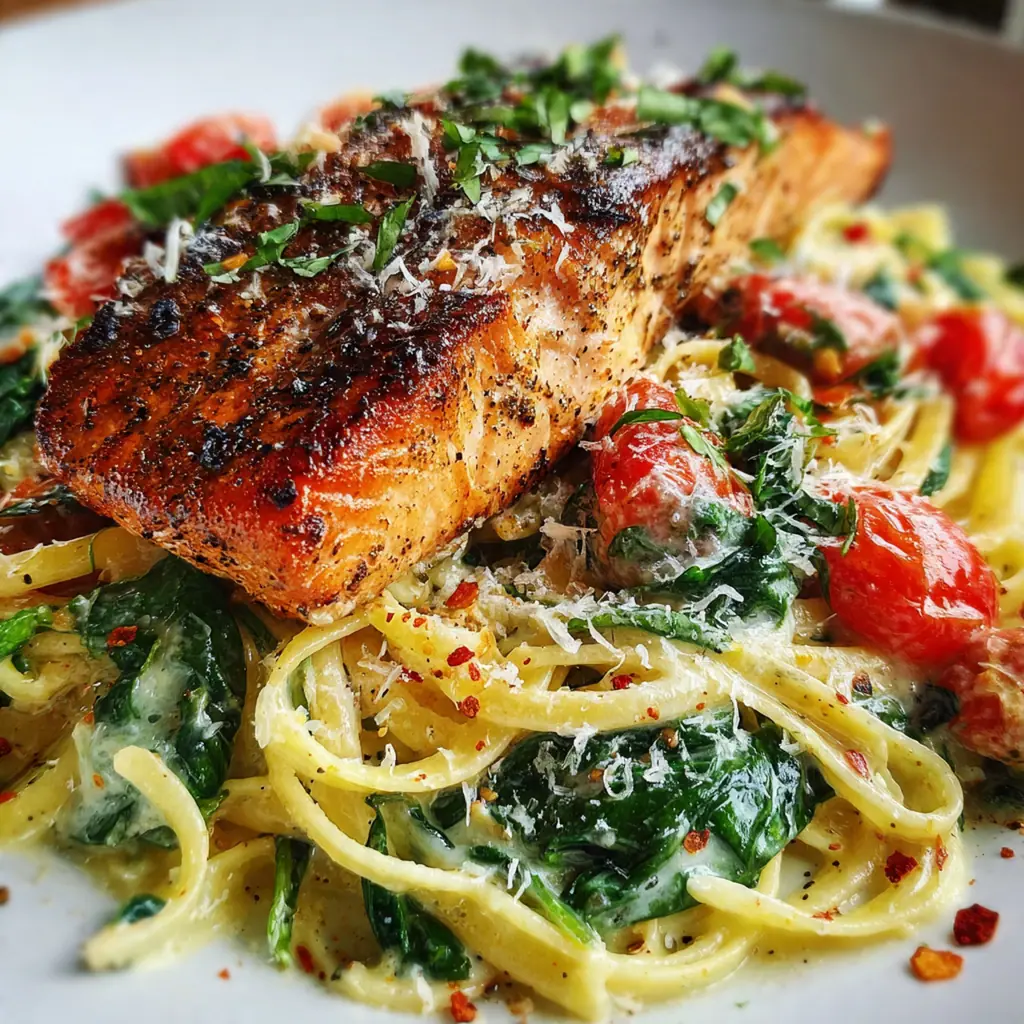
Pro Tips
- Season your pasta water generously — it should taste like the sea
- Toast pine nuts separately so they stay crunchy
- Add lemon juice off the heat to preserve its bright flavor
- Warm your serving bowls before plating
- I always reserve a little extra dill for garnish at the table
- These small steps elevate the dish from good to memorable.
Frequently Asked Questions
Long, flat pasta shapes like fettuccine or linguine are ideal for this dish. Their wide surface area catches the creamy salmon spinach sauce beautifully. You can also use tagliatelle or pappardelle if you prefer.
While this pasta is best served fresh, you can prep the ingredients in advance. Cook the salmon and prepare the sauce base, then combine with freshly boiled pasta when ready to serve. Leftovers can be stored in the fridge for up to 2 days.
For a lighter version, you can substitute heavy cream with half-and-half or whole milk mixed with a tablespoon of flour to thicken. For a dairy-free option, full-fat coconut milk works surprisingly well with the salmon and dill flavors.
The dish is ready when the salmon is opaque and flakes easily with a fork, the spinach is fully wilted, and the sauce has thickened enough to coat the back of a spoon. The entire cooking process takes about 30 minutes.
As an Italian-American main course, this pasta pairs perfectly with a crisp green salad and garlic bread. For a complete restaurant experience, serve with a glass of the same dry white wine (Pinot Grigio) used in the sauce.