

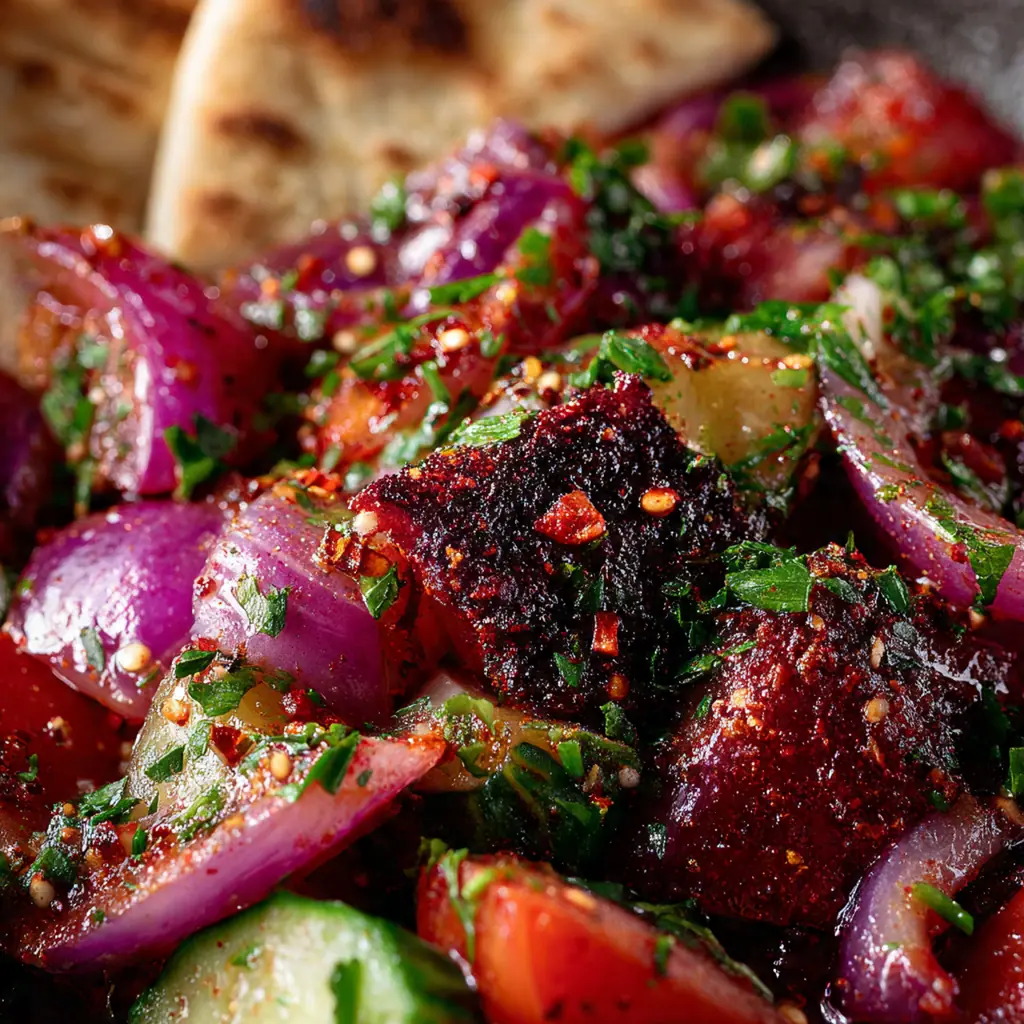
This Lebanese Sumac Onions recipe is about to become your new favorite way to add instant brightness to any meal. It brings the tangy magic of Middle Eastern cuisine straight to your table with zero cooking required. I first fell in love with these vibrant purple onions at a local shawarma spot and now I make them weekly. The combination of sharp sumac, fresh lemon, and garden herbs transforms simple ingredients into something truly special.
Why You'll Love This Recipe
- Ready in just 10 minutes with absolutely no heat required
- The tangy sumac and fresh herbs wake up any dish instantly
- Gets even better as it sits in your fridge
- Naturally vegan and gluten-free for everyone to enjoy
- I keep a batch in my fridge at all times
Ingredients You’ll Need
- Red onions: Essential for the signature color and mild sweetness, always choose firm bulbs with tight dry skins
- Ground sumac: Provides that distinctive tangy citrusy flavor, buy from stores with high turnover since it loses potency fast
- Fresh lemon juice: Brightens everything up, never use bottled since fresh gives the best acidic kick
- Extra virgin olive oil: Adds richness and helps coat every slice, choose a fruity oil from your favorite producer
- Sea salt: Draws out moisture to soften the onions while seasoning every layer beautifully
- Black pepper: Adds subtle warmth that balances the bright acidity, always grind fresh for best aroma
- Fresh flat-leaf parsley: Brings a clean grassy freshness that makes the whole dish taste lively
- Fresh mint leaves: Adds cooling contrast to the sharp sumac and lemon, use only bright green leaves
- Red pepper flakes: Optional heat that you can adjust to your preference, start with just a pinch
- Pomegranate seeds: Optional garnish that adds sweet pops of color and texture, perfect for special occasions
- Scallions: Optional extra bite and green color, chop finely so they blend well with the other ingredients
How to Make It
Slice The Onions Thinly:
Peel your red onions and slice them as paper-thin as possible into uniform half-moons. The thinner you cut them, the better they’ll absorb the tangy dressing and develop that perfect soft-yet-crunchy texture.
Salt And Massage:
Place the sliced onions in a medium bowl and sprinkle with sea salt. Use your hands to massage the salt into the onions for about 30 seconds, which draws out moisture and significantly softens their raw bite.
Add The Lemon Juice:
Pour fresh lemon juice over the salted onions and toss everything together well. Let this mixture sit for 5 minutes, giving the acid time to mellow the sharp raw onion flavor.
Sprinkle Sumac Generously:
Evenly sprinkle ground sumac over the onion mixture until it’s generously coated and turns a beautiful deep purple-red color. This is where the magic happens and the signature tangy flavor develops.
Drizzle Olive Oil And Season:
Drizzle in your extra virgin olive oil and add freshly ground black pepper. Toss everything thoroughly until every single onion slice is coated in that gorgeous purple-hued dressing.
Fold In Fresh Herbs:
Add your finely chopped parsley and mint, folding them gently into the onion mixture so you don’t bruise the delicate leaves. Taste and adjust the seasoning if needed – sometimes it wants more sumac or another squeeze of lemon.
Let It Rest:
Allow the sumac onions to rest at room temperature for at least 15 minutes before serving. This crucial step lets the flavors meld together and the onions soften just enough while keeping their pleasant crunch.
Toss And Serve:
Give it one final toss to redistribute all the flavors, then transfer to a serving bowl or plate. If using, garnish with optional pomegranate seeds for a beautiful pop of color and sweetness.
You Must Know
- Always use red onions, their color and slight sweetness are essential
- Sumac goes stale fast, so buy small amounts and keep it dark
- Use a mandoline for perfect paper-thin slices that pickle beautifully
- I learned the hard way that using yellow onions just doesn’t give the same pretty color or f…
Storage Tips
Store any leftover sumac onions in an airtight container in the refrigerator for up to 3 days. The onions will continue to soften and marinate, which actually improves the flavor rather than making it worse. Just remember to bring them back to room temperature before serving again – cold onions won’t taste nearly as vibrant. I find the flavor peaks around the 24-hour mark, making this perfect for meal prep.
Ingredient Substitutions
If you can’t find sumac, you could try a mix of lemon zest with a tiny pinch of citric acid, though the flavor won’t be quite the same. For the herbs, cilantro works instead of parsley if that’s your preference, and dill can substitute for mint in a pinch. If you don’t have fresh lemons, bottled lemon juice will work in an emergency, but fresh really does make a huge difference in brightness.
Serving Suggestions
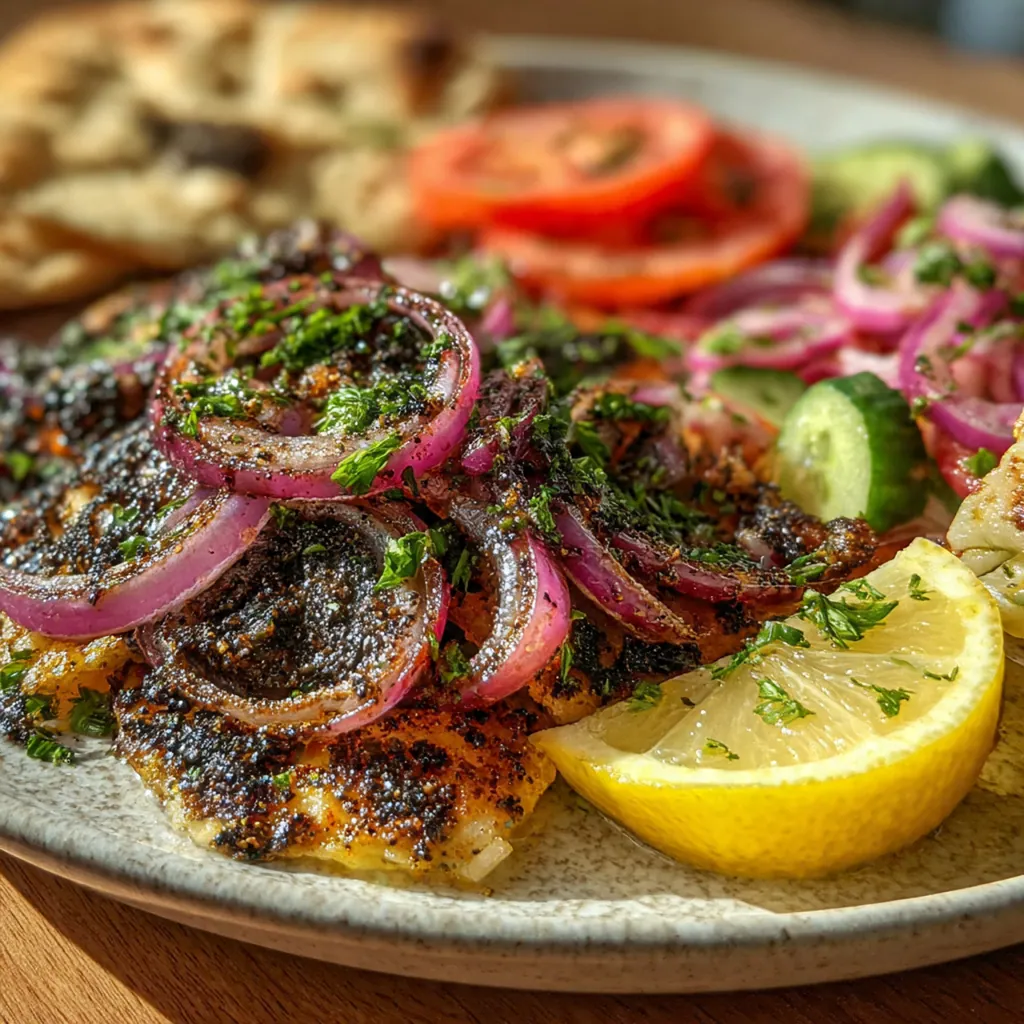
I love piling these vibrant onions on top of hummus or labneh and scooping it all up with warm pita bread. They’re absolutely incredible alongside grilled kebabs, chicken shawarma, or crispy falafel, adding that perfect tangy contrast. You can also use them as a condiment in sandwiches and wraps, or serve them as part of a mezze platter with other Mediterranean dips.
Cultural Context
Sumac onions are a staple in Lebanese cuisine and throughout the Middle East, where they’re known as ‘salatat summaq’ or simply ‘sumac salad.’ They showcase the region’s love for simple preparations that let bold flavors shine through. The tangy sumac spice has been used in Middle Eastern cooking for thousands of years, prized for its lemony flavor before citrus was widely available. Every family has their own slight variation, but the core technique of salting, acidulating, and spicing raw onions remains beautifully consistent.

Pro Tips
- A mandoline gives you those perfect paper-thin slices in seconds
- Keep sumac in a dark cupboard, light makes it lose flavor fast
- Letting it rest for an hour makes the flavors even better
- I always make a double batch because it disappears so quickly
- If your onions taste too strong, add a tiny pinch of sugar to balance things out.
Frequently Asked Questions
Sumac has a bright, lemony flavor that adds tangy acidity to the onions without any cooking. It’s the key ingredient that gives this Lebanese dish its signature tartness. If you don’t have sumac, you can substitute with extra lemon juice, but you’ll miss that unique earthy citrus flavor.
Yes! This dish actually improves as it sits. The lemon juice and sumac continue to soften and marinate the onions, making it perfect to prepare up to 24 hours ahead. Store it in an airtight container in the refrigerator for best results.
For the best texture, slice the red onions into thin half-moons. A mandoline gives you perfectly uniform slices, but a sharp knife works great too. The thinner the slices, the faster the sumac and lemon juice will tenderize them.
This Lebanese dish pairs beautifully with grilled meats like chicken shawarma or kebabs, falafel, and mezze platters. It’s also fantastic on sandwiches, in wraps, or alongside roasted vegetables. The bright acidity cuts through rich, fatty foods perfectly.
The onions are ready immediately after mixing, but letting them sit for 15-20 minutes allows the flavors to meld beautifully. You’ll notice the onions start to soften slightly and turn a vibrant reddish-purple color. They’re perfect when the sharp bite of the raw onion mellows but it still retains its crunch.