


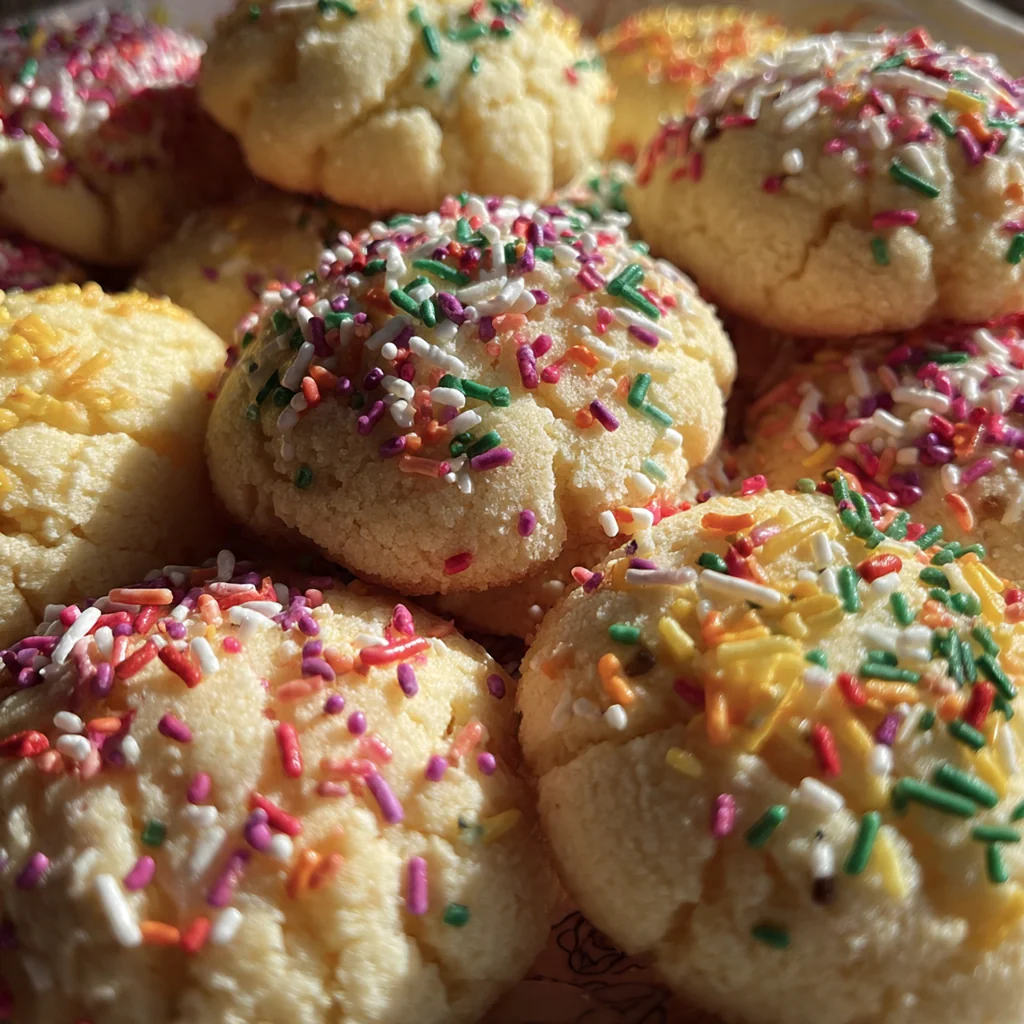
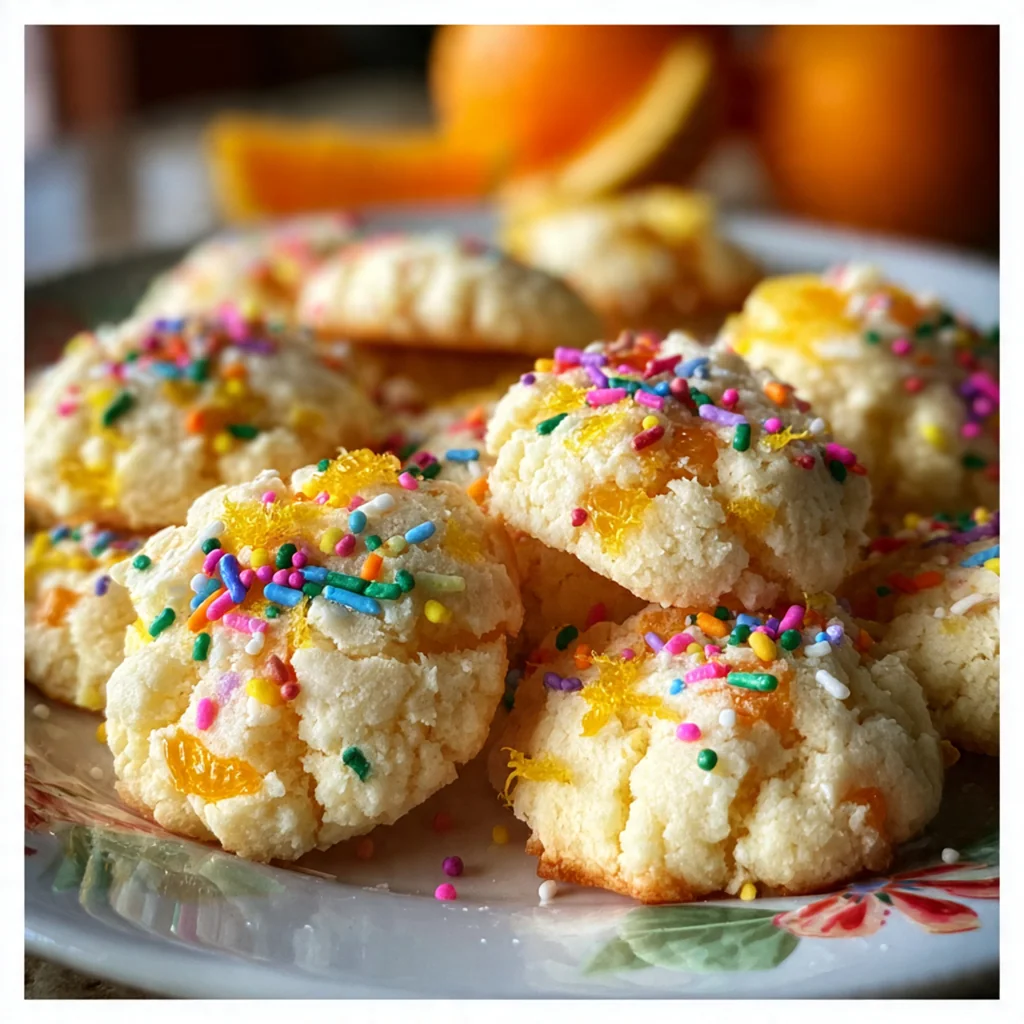
Traditional Italian Easter Cookies, known as Pasticcini di Pasqua, are a staple in my family during the holiday season. These light and slightly sweet biscuits carry the warmth of generations, flavored simply with vanilla and bright lemon zest. Unlike heavy desserts, these cookies offer a tender crumb perfect for pairing with a strong espresso after a big Easter lunch. Making them connects you to a beautiful Italian tradition of baking for loved ones.
Why You'll Love This Recipe
- The almond and lemon zest adds an authentic Italian flavor that feels nostalgic
- They are light and not overly sweet, perfect for dunking in coffee
- This recipe makes a large batch, ideal for sharing with family and friends
- Kids absolutely love helping shape the cookies and adding the rainbow sprinkles
- I look forward to baking these every single year
Ingredients You’ll Need
- Large eggs: Essential for structure and leavening, room temperature eggs whip up better for a lighter cookie texture
- Granulated sugar: Provides the right amount of sweetness and helps with browning, always use fresh granulated sugar for best results
- Unsalted butter: Adds richness and tenderness to the dough, melted and cooled to avoid scrambling the eggs
- Vanilla extract: Offers a warm, comforting background note, use pure vanilla extract for the most authentic flavor
- Almond extract: Gives that signature Italian bakery aroma, a little goes a long way so measure carefully
- Lemon zest: Brightens the entire cookie with fresh citrus oil, zest the lemon finely to avoid bitter pith
- All-purpose flour: The structural backbone of the cookie, spoon and level your flour to avoid a dry dough
- Baking powder: Provides the necessary lift for these non-yeast cookies, check the expiration date for maximum rise
- Salt: Balances the sweetness and enhances the other flavors, fine sea salt dissolves easily into the dough
- Whole milk: Helps create a soft, pliable dough, whole milk provides the best richness and texture
- Egg yolk: Used for the wash to give the cookies a beautiful golden sheen, whisked with a splash of milk
- Rainbow sprinkles: Adds crunch and festive color, press them in gently so they stick to the egg wash
- Powdered sugar: Creates a sweet, simple glaze for the finished cookies, whisk out any lumps before drizzling
- Milk or lemon juice: Thins the powdered sugar into a glaze, lemon juice pairs beautifully with the zest in the dough
How to Make It
Preheat and Prep:
Start by preheating your oven to 350°F. Line two baking sheets with parchment paper or silicone baking mats so your Traditional Italian Easter Cookies don’t stick.
Mix Wet Ingredients:
In a large bowl, beat the 4 whole eggs with the granulated sugar on medium-high speed for about 3-4 minutes. You want the mixture to become pale, thick, and form ribbons that hold their shape when you lift the beaters.
Add Flavor and Fat:
Pour in the melted butter, making sure it has cooled down so it doesn’t cook the eggs. Add the vanilla extract, almond extract, and lemon zest, then beat for another minute until everything is fragrant and fully combined.
Combine Dry Ingredients:
In a separate bowl, whisk together the flour, baking powder, and salt. Gradually add this to your wet mixture on low speed, pouring in the milk slowly to help form a soft, sticky dough.
Knead the Dough:
Turn the dough out onto a lightly floured surface. Gently knead it for 2-3 minutes until it becomes smooth and elastic. The dough will be a little tacky, but it should hold together well without sticking to your hands too much.
Shape the Cookies:
Divide the dough into 4 equal parts. Roll each part into a long rope about 16 inches long and 1/2 inch thick. Cut these ropes into 2-inch pieces, roll them into small logs, and bend them into a crescent or ‘S’ shape. Place them 2 inches apart on the baking sheets.
Apply the Egg Wash:
Whisk the egg yolk with 1 tablespoon of milk. Lightly brush this mixture over the tops of each cookie. If you are using rainbow sprinkles, press them into the dough now so they adhere during baking.
Bake to Perfection:
Bake for 12-15 minutes, rotating the pans halfway through. You are looking for the bottoms to be just starting to turn golden while the tops remain pale and set.
Cool and Glaze:
Let the cookies cool on the baking sheet for 3 minutes before moving them to a wire rack. Once completely cool, whisk the powdered sugar with milk or lemon juice and drizzle it over the tops. Let the glaze set for 30 minutes before serving.
You Must Know
- Let the dough rest for 10 minutes before shaping to make it easier to handle
- Room temperature eggs are key to creating that light, tender crumb
- If the dough feels too sticky, lightly oil your hands instead of adding more flour
- I find that letting the glaze set completely makes stacking them for storage much cleaner
Storage Tips
Once the cookies are completely cooled and the glaze has set, store them in an airtight container at room temperature. They will stay fresh and soft for up to a week, which is great because the flavors actually meld and improve after a day or two. If you need to keep them longer, these cookies freeze beautifully for up to 3 months; just layer them between sheets of parchment paper in a freezer-safe container to prevent sticking and freezer burn.
Ingredient Substitutions
If you want a bit of crunch and a more rustic texture, you can substitute up to 1/2 cup of the all-purpose flour with fine cornmeal, which is a traditional variation in many Italian households. For a dairy-free version of these Italian Easter Cookies, use a high-quality plant-based butter and your favorite unsweetened non-dairy milk. If nut allergies are a concern, simply omit the almond extract and increase the vanilla extract to 2 teaspoons to maintain that lovely aromatic quality.
Serving Suggestions
Serve these cookies alongside a steaming cup of espresso or a frothy cappuccino for an authentic Italian coffee break experience. They are also wonderful with a cold glass of milk, especially for the younger members of the family. Try arranging them on a platter with other Italian Easter treats like pastiera (wheat berry tart) or colomba (dove-shaped bread) for a festive holiday spread.
Cultural Context
Pasticcini di Pasqua are a beloved part of the Italian Easter table, representing joy and the arrival of spring. In Italy, baking these cookies is often a communal activity where families gather to shape the dough and chat, passing down techniques from nonna to grandchild. The use of simple pantry ingredients like eggs, flour, and sugar reflects the resourcefulness of traditional Italian home baking, creating something special without needing fancy equipment.
Pro Tips
- Don’t skip the resting time for the dough, as 10 minutes makes it much easier to handle
- Room temperature eggs whip up better and create a lighter cookie texture
- If the dough feels too sticky, lightly oil your hands instead of using more flour
- These cookies won’t spread much, so you can place them closer together on the baking sheet
- I recommend rotating the baking sheets halfway through baking for even browning
Frequently Asked Questions
Yes! You can bake these cookies up to 3 days in advance. Store them in an airtight container at room temperature to keep them fresh. They actually taste better the next day after the flavors have melded together.
If you don’t have almond extract, you can simply omit it and increase the vanilla extract to 2 teaspoons. Alternatively, you can use 1/4 teaspoon of almond emulsion or a splash of anise extract for a different but authentic Italian flavor profile.
The cookies are ready when they’re lightly golden brown around the edges and firm to the touch on top. They should take about 15 minutes to bake. Don’t overbake them, as they should remain light and tender.
These cookies are traditionally served after Easter lunch with coffee, espresso, or cappuccino. They also pair beautifully with a glass of dessert wine like Vin Santo or a warm cup of herbal tea for an afternoon treat.
Absolutely! These cookies freeze very well. Once completely cooled, place them in a freezer-safe container or bag. They’ll keep for up to 3 months. Just thaw at room temperature for an hour before serving.