


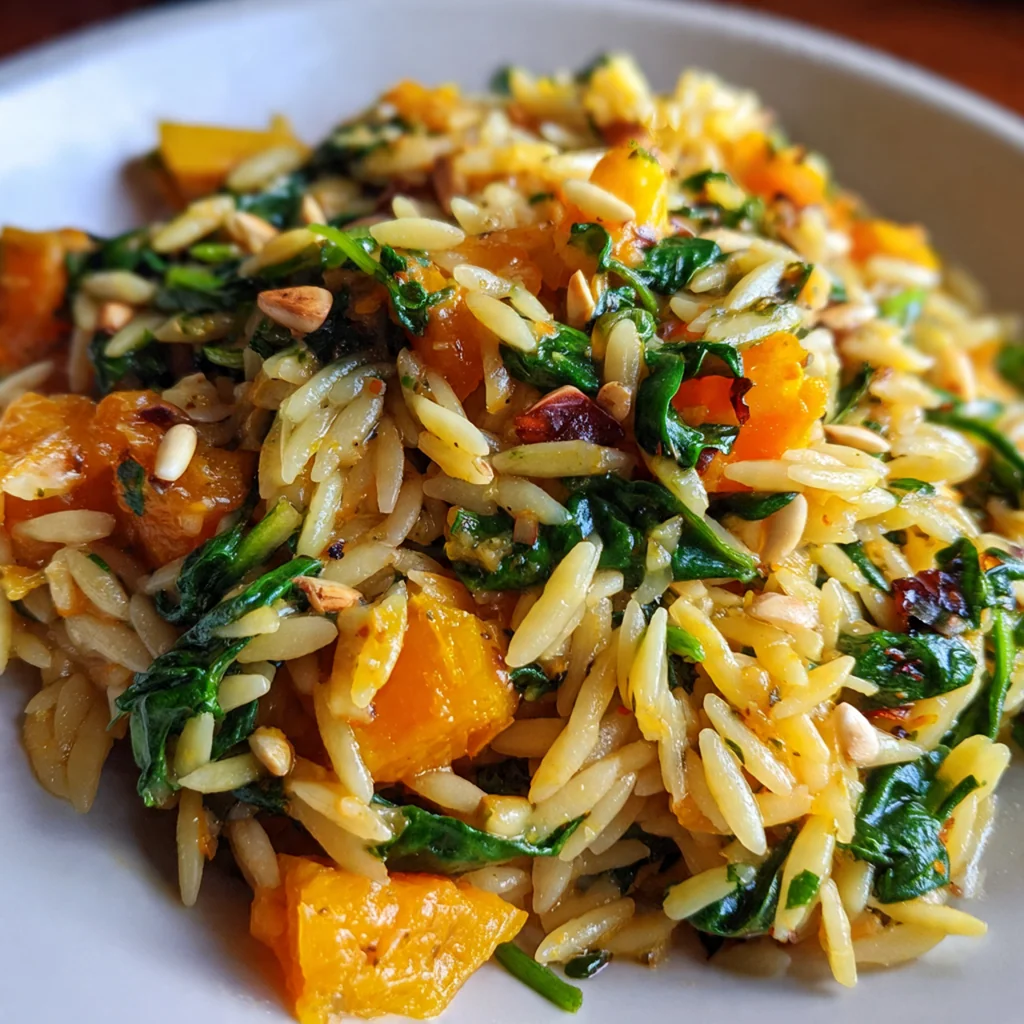
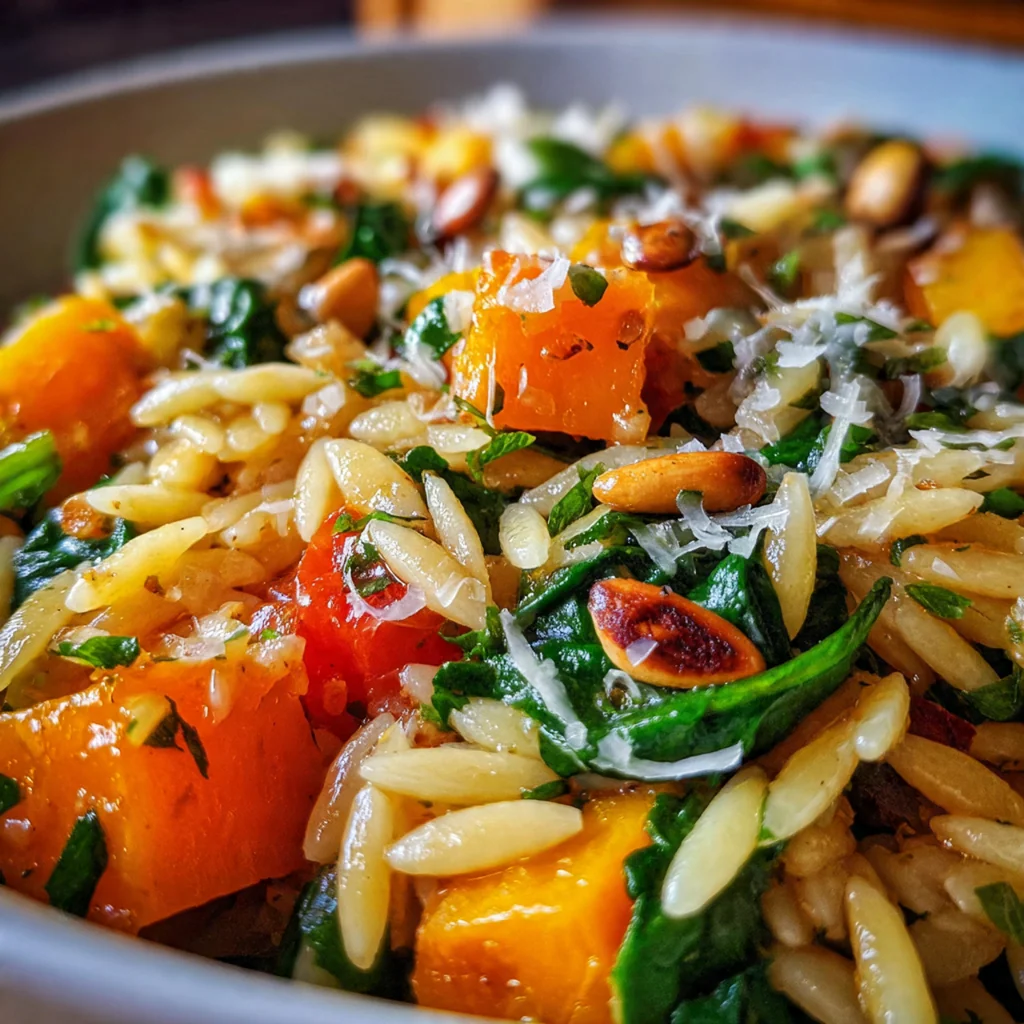
This creamy orzo butternut squash spinach dish is my ultimate weeknight savior, bringing Mediterranean comfort straight to my dinner table. It’s a one-pot wonder where sweet, roasted squash and earthy spinach mingle with garlicky, creamy orzo. The salty feta and bright lemon finish make every bite feel special without hours of work. I love how it feels indulgent but is packed with wholesome, vibrant ingredients that come together beautifully.
Why You'll Love This Recipe
- It’s a complete vegetarian meal all in one pan
- You get the perfect mix of creamy, tender, and silky textures
- The lemon and feta make it incredibly bright and savory
- Leftovers reheat like a dream for easy lunches
- I make this weekly when squash is in season
Ingredients You’ll Need
- Butternut squash: Its natural sweetness caramelizes when roasted, adding a tender, hearty base to the dish. Choose one that feels heavy for its size with a firm, matte skin.
- Olive oil: This coats the squash for roasting and sautés the aromatics, building a rich flavor foundation. A good extra virgin olive oil makes a noticeable difference here.
- Yellow onion: Finely chopped and cooked until soft, it creates a savory-sweet base layer that deepens the entire dish. Yellow onions are perfect for their balanced flavor.
- Garlic: Minced and sautéed briefly, it infuses the oil with that essential aromatic punch that makes the orzo so irresistible. Fresh cloves are non-negotiable for the best taste.
- Orzo pasta: Toasting the little rice-shaped pasta before simmering unlocks a nutty flavor and prevents it from becoming mushy. It cooks right in the broth, absorbing all that savory goodness.
- Low-sodium vegetable broth: This is the main cooking liquid, so its quality directly impacts the final flavor. Using a broth you enjoy drinking straight is my best tip.
- Dried thyme: Its earthy, slightly floral notes are a classic pairing with squash and onions, tying the Mediterranean flavors together beautifully.
- Red pepper flakes: Just a pinch adds a subtle warmth that plays wonderfully against the squash’s sweetness. It’s optional but highly recommended.
- Baby spinach: It wilts down in minutes, adding pops of green color and a lovely silky texture. You can use a whole bag—it cooks down significantly.
- Lemon: Both the zest and juice are crucial, cutting through the richness with a vibrant, sunny acidity that makes all the other flavors pop.
- Feta cheese: Salty, tangy crumbles soften slightly over the hot orzo, creating little creamy pockets. A block you crumble yourself has better texture and flavor than pre-crumbled.
- Pine nuts or walnuts: Toasted until golden, they add a fantastic crunchy contrast and a rich, nutty finish. It’s a simple upgrade that feels fancy.
- Fresh parsley or mint: A sprinkle of fresh herbs at the end adds a final layer of freshness and makes the whole dish look restaurant-worthy.
How to Make It
Roast the Squash:
Preheat your oven to 425°F and toss the cubed squash with oil, salt, and pepper on a baking sheet. Roasting it in a single layer is key for getting those caramelized edges instead of steaming. You’ll know it’s ready when the pieces are tender and lightly browned, which adds a ton of flavor to the final dish.
Sauté the Aromatics:
Heat olive oil in your largest skillet or Dutch oven over medium heat and add the chopped onion. Cook it slowly until it’s soft and translucent, which usually takes about five to seven minutes. This gentle cooking builds a sweet, savory foundation that the whole recipe rests on.
Toast the Orzo:
Stir the minced garlic into the softened onions and cook for just a minute until it’s wonderfully fragrant. Then, add the dry orzo right into the skillet. Stir it constantly for a couple of minutes until it turns a light golden color and smells nutty. This step is the secret to preventing a gummy texture.
Simmer the Orzo:
Pour in the vegetable broth and add the thyme, red pepper flakes, and remaining salt and pepper. Give everything a good stir and bring it to a boil. Once bubbling, reduce the heat to low, cover the pot, and let it simmer. The orzo will cook and absorb most of that flavorful liquid in about ten to twelve minutes.
Combine Squash and Spinach:
Once the orzo is al dente and the liquid is mostly absorbed, stir in your roasted butternut squash and all of the fresh spinach. Put the lid back on for just two to three minutes. The residual heat will wilt the spinach perfectly without overcooking it, keeping that vibrant green color.
Finish with Lemon and Feta:
Take the skillet off the heat and stir in the lemon zest and juice immediately. This is when the whole dish comes alive. Taste it and add a touch more salt or pepper if you think it needs it. Then, sprinkle the crumbled feta cheese evenly over the top and cover it for one final minute to let the cheese soften gently into the creamy orzo.
Serve and Garnish:
Spoon the creamy orzo butternut squash spinach into bowls while it’s still warm. If you’re using them, now’s the time to scatter over those toasted nuts and a handful of chopped fresh herbs. The contrast of the crunchy nuts and the fresh herbs against the creamy pasta is absolutely divine.
You Must Know
- Toasting the orzo is non-negotiable for perfect texture
- Use a broth you’d drink on its own
- The lemon juice at the end is a game-changer
- It thickens as it sits, so have extra broth handy
- This is my go-to for potlucks and meal prep
Storage Tips
Store any leftovers in an airtight container in the fridge where they’ll keep beautifully for up to four days. When you’re ready to reheat, I always do it gently in a skillet over low heat with a splash of broth or water to loosen it up, as the orzo continues to absorb liquid. The microwave can work in a pinch, but it tends to dry it out more. Honestly, I sometimes just eat it cold straight from the container for a fantastic pasta salad.
Ingredient Substitutions
If butternut squash is out of season, sweet potato or even carrots cubed small will roast up just as nicely. You can swap the baby spinach for kale or Swiss chard, just chop it and give it a minute longer to wilt. Don’t have feta? Goat cheese crumbles or even a sharp grated pecorino would be lovely. For a nut-free version, skip the pine nuts or use toasted pumpkin seeds. If you need it gluten-free, look for a certified gluten-free orzo-style pasta made from rice or corn.
Serving Suggestions
I love serving this with a simple arugula salad dressed with lemon vinaigrette to keep the meal light and fresh. A crusty piece of sourdough or focaccia on the side is perfect for scooping up every last bit of the creamy sauce from your bowl. For a heartier meal, it pairs wonderfully with grilled chicken or lemon-herb shrimp. In the cooler months, a bowl of this creamy orzo butternut squash spinach with a glass of crisp white wine feels like the coziest dinner imaginable.
Cultural Context
This dish takes its inspiration from the sun-drenched coasts of the Mediterranean, where simple, vegetable-forward meals are a way of life. You’ll find similar combinations of pasta, squash, and tangy cheese throughout Greece and Italy, celebrating what’s seasonal and fresh. The method of toasting the pasta before simmering it in broth is a classic technique that builds deep flavor with minimal effort. It’s that beautiful principle of letting a few incredible ingredients shine through thoughtful, straightforward cooking that I adore about this cuisine.
Pro Tips
- Don’t crowd the squash on the baking sheet
- Let the orzo simmer undisturbed for the first 5 minutes
- Reserve a bit of feta for garnish
- Toast nuts in a dry pan until fragrant
- I always double the recipe for lunches
Frequently Asked Questions
Any standard dried orzo pasta, which is a small rice-shaped pasta, works perfectly. There’s no need for a specific brand—just measure 1 1/2 cups (about 10 ounces) of uncooked orzo. The starch from the pasta helps thicken the broth into a wonderfully creamy sauce as it cooks.
Yes, you can prepare it ahead. Store cooled leftovers in an airtight container in the refrigerator for up to 3 days. Reheat gently on the stovetop with a splash of broth or water, as the orzo will continue to absorb liquid. The spinach will wilt further, but the flavors will still be delicious.
For a similar salty, tangy finish, try crumbled goat cheese or grated Parmesan. For a dairy-free version, a sprinkle of nutritional yeast or a dollop of vegan cream cheese can add depth, though the flavor profile will change slightly.
The orzo should be tender and have absorbed most of the liquid, creating a creamy consistency—this takes about 15-18 minutes of simmering. The butternut squash should be fork-tender. Finally, stir in the spinach just until wilted, which only takes a minute or two.
This dish is a complete meal on its own! For a larger Mediterranean spread, pair it with a simple green salad with a lemon vinaigrette, some warmed pita bread, or marinated olives. A crisp white wine like Sauvignon Blanc also complements the lemon and feta beautifully.