

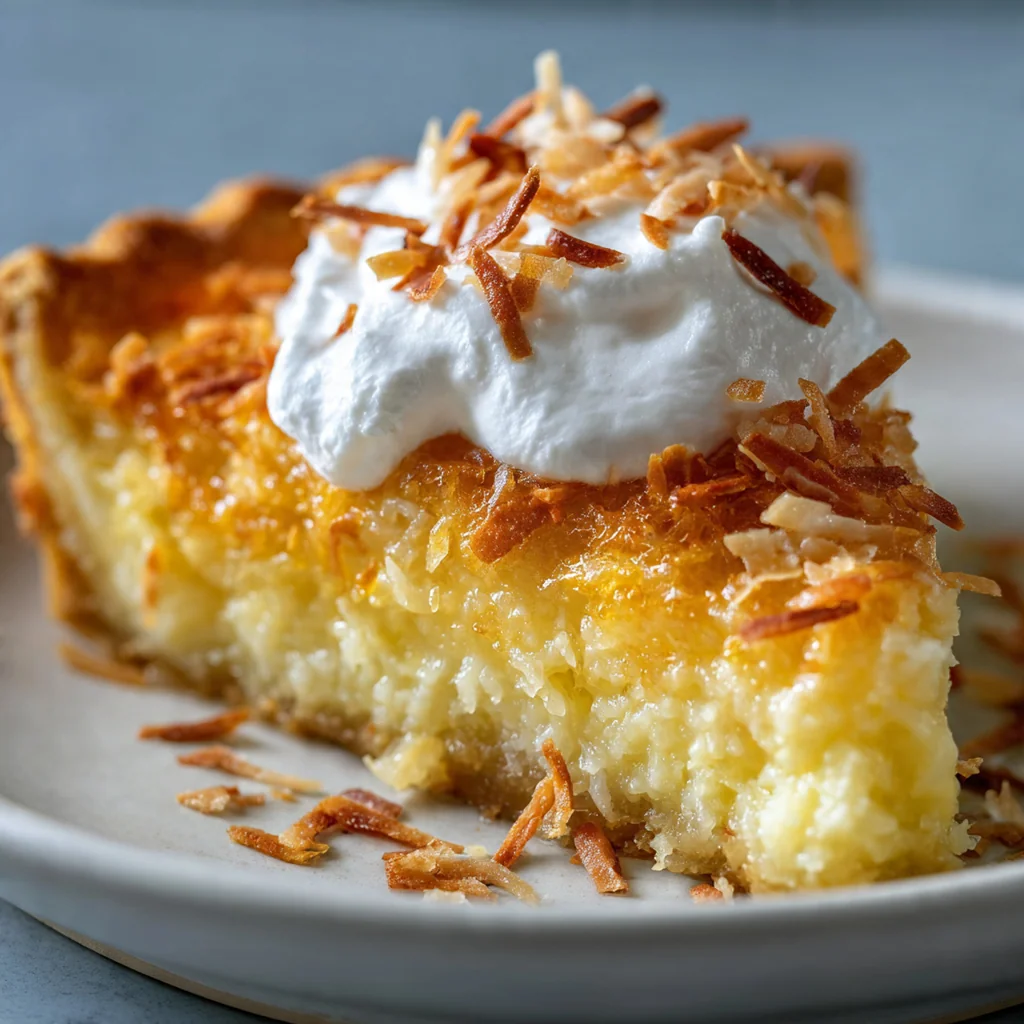
This crustless coconut pie dessert is one of those cherished recipes that feels like a warm hug from your grandmother’s kitchen. It’s an old-fashioned American treat with Southern roots, where simplicity and comfort are the main ingredients. You won’t need any fancy techniques or a pie crust, just a whisk and a bowl. It bakes up into a creamy, custardy masterpiece that forms its own gorgeous golden top and fills your home with a sweet, toasty aroma.
Why You'll Love This Recipe
- You get a rich, custardy dessert without the fuss of making a pie crust
- Pantry staples transform into something incredibly special
- That caramelized golden top is a textural dream
- It’s even better the next day after the flavors meld
- My family requests this more than any other treat
Ingredients You’ll Need
- Unsalted butter: melted and cooled for richness and that delicate crumb on top, and for greasing the pie plate so nothing sticks. Using unsalted lets you control the salt level perfectly.
- Large eggs: at room temperature to help the batter emulsify smoothly and give the pie its structure. They’re the backbone of the custard.
- Granulated sugar: for sweetness and to help with that beautiful caramelization on the surface as it bakes. It dissolves right into the egg mixture.
- All-purpose flour: just a bit to thicken the custard and give it a sliceable texture without making it heavy or cakey.
- Fine sea salt: a pinch to balance all the sweetness and enhance the coconut and vanilla flavors, making the whole pie pop.
- Whole milk: at room temperature for the creamiest, most luxurious base. The fat content is key to that velvety mouthfeel.
- Pure vanilla extract: for that warm, aromatic background note that pairs so perfectly with coconut. Use the real stuff for the best flavor.
- Coconut extract: optional but fantastic for doubling down on that tropical, toasty coconut essence. A little goes a long way.
- Sweetened shredded coconut: divided for texture inside and a toasted, crispy layer on top. It’s the star of the show.
How to Make It
Prepare Your Pan and Oven:
Start by preheating your oven to 350°F and generously buttering a deep-dish pie plate. This ensures your crustless coconut pie dessert releases perfectly and that deep dish gives the custard room to puff up.
Whisk the Eggs:
Crack your room temperature eggs into a large bowl and whisk them until they’re frothy and completely smooth. This incorporates air and starts building the custard’s light texture.
Combine Dry Ingredients:
Add the sugar, flour, and salt directly to the eggs. Whisk it all together vigorously until there isn’t a single lump of flour left. A smooth batter here means a smooth pie later.
Incorporate the Wet Ingredients:
Slowly stream in the milk, cooled melted butter, and both extracts while you keep whisking. Going slow prevents the eggs from curdling and makes everything beautifully homogeneous.
Fold in the Coconut:
Stir in one cup of the shredded coconut until it’s evenly distributed throughout the batter. This gives every single bite that wonderful chewy texture.
Pour and Top:
Carefully pour the batter into your prepared pie plate. Sprinkle that last quarter cup of coconut evenly over the top for that signature golden, crunchy lid.
Bake to Perfection:
Bake for 40 to 50 minutes. You’re looking for a deep golden brown top and a center that’s set with just the slightest jiggle. A toothpick should come out clean.
Cool Completely:
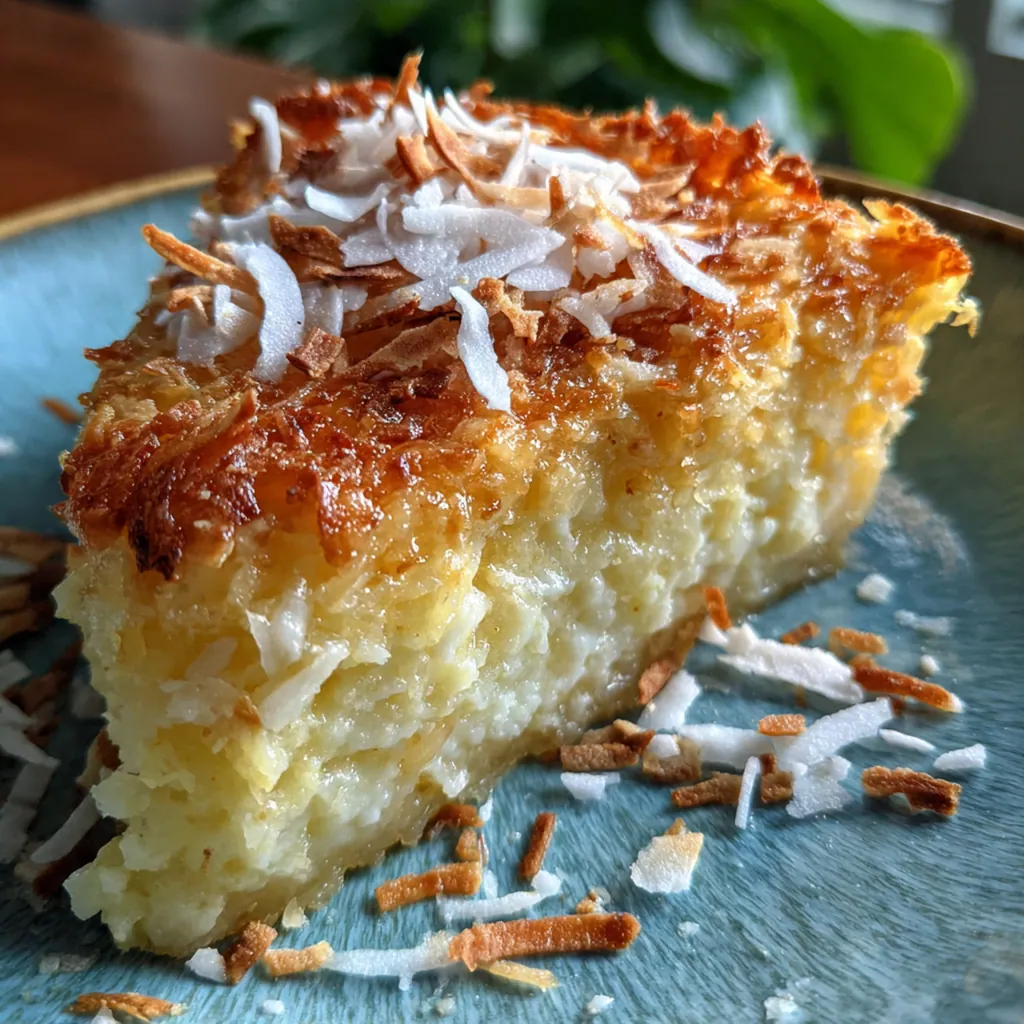
Place the pie on a wire rack and let it cool for at least half an hour. It will continue to firm up as it cools, making for clean, beautiful slices.
You Must Know
- Room temperature ingredients are non-negotiable for a silky batter
- Let the melted butter cool so it doesn’t cook the eggs
- The center jiggle is your guide to perfect doneness
- Cooling time is part of the cooking process
- I never skip the coconut extract
Storage Tips
Once your crustless coconut pie dessert has cooled completely, cover it tightly with plastic wrap or transfer slices to an airtight container. It keeps beautifully in the refrigerator for up to four days. I love eating a slice straight from the fridge for a cool, firm treat, but you can also warm individual pieces gently in the microwave for about 15 seconds to bring back that just-baked warmth. The texture and flavor actually improve after a day, making it a fantastic make-ahead option.
Ingredient Substitutions
If you’re out of whole milk, 2% will work in a pinch, though the pie might be a touch less rich. For a gluten-free version, swap the all-purpose flour with your favorite 1:1 gluten-free baking blend. In a real pinch, you could use unsweetened shredded coconut, but you might want to add an extra tablespoon of sugar to the batter. And if you don’t have coconut extract, a bit of almond extract or just using all vanilla still makes a fantastic pie. The recipe is wonderfully forgiving.
Serving Suggestions
This pie is sublime all on its own, but a dollop of freshly whipped cream or a scoop of vanilla bean ice cream melting over a warm slice is pure heaven. For a bit of contrast, try it with a side of tart berries or a few slices of fresh mango. A light dusting of powdered sugar right before serving looks lovely, and a sprinkle of toasted coconut flakes adds an extra nutty crunch. I often serve it with strong black coffee to balance the sweetness.
Cultural Context
This style of crustless, custard-based pie is a hallmark of resourceful Southern and Midwestern home baking, where making something special from pantry staples was a way of life. You’ll find similar ‘pudding pies’ or ‘custard pies’ in community cookbooks going back generations, often with a note like ‘Mother’s Sunday special’ scribbled in the margin. It’s a dessert born of practicality that became a beloved tradition, proving you don’t need fancy ingredients to create pure comfort. That humble, self-forming top is its badge of honor.
Pro Tips
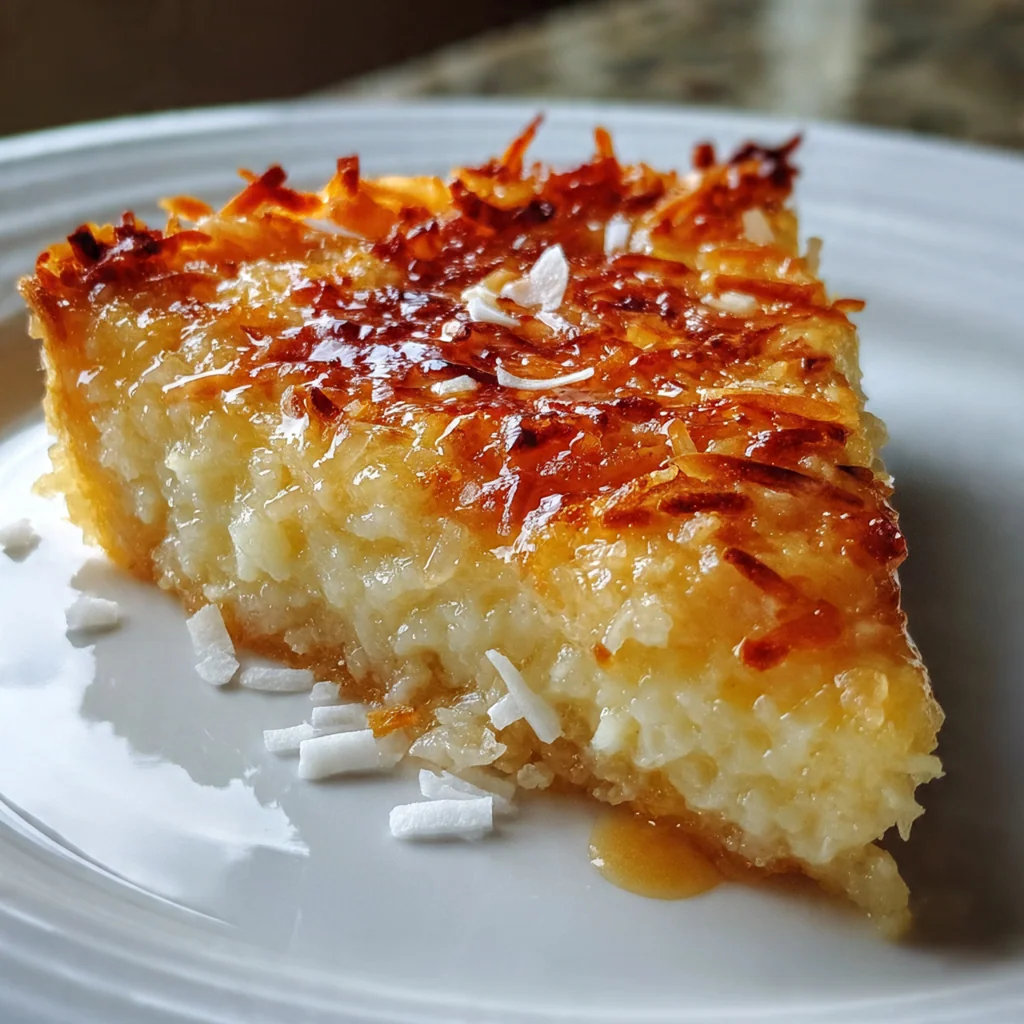
- Toast the topping coconut for a deeper, nuttier flavor
- Use a deep-dish pie plate to prevent any overflow
- Don’t skip the wire rack cooling step
- Let it cool completely for the cleanest slices
- My secret is using a glass pie plate to watch the bottom brown
Frequently Asked Questions
Coconut extract is optional but highly recommended for a more intense, authentic coconut flavor. The sweetened shredded coconut provides texture and subtle flavor, while the extract boosts the aromatic essence of coconut throughout the creamy custard base.
Yes, you can make it a day ahead. Once cooled completely, cover and refrigerate. The custard sets further, making it easier to slice. Serve it chilled for a firmer texture or let it sit at room temperature for 20 minutes before serving for a softer, creamier bite.
For the richest texture, whole milk is best. However, you can use 2% milk in a pinch, though the custard may be slightly less creamy. Avoid non-dairy milks like almond or oat, as they won’t provide the same protein structure or richness needed for the custard to set properly.
The dessert is done when the edges are set and the center has a slight, gentle jiggle—it shouldn’t be liquidy. The top will be a beautiful, even golden brown. It will continue to set as it cools. A knife inserted near the center should come out mostly clean.
This Southern-style dessert is delightful on its own, but you can dress it up. A dollop of freshly whipped cream, a sprinkle of toasted coconut, or a drizzle of caramel sauce pairs beautifully. For a classic pairing, serve it with fresh berries like strawberries or raspberries to cut through the sweetness.