

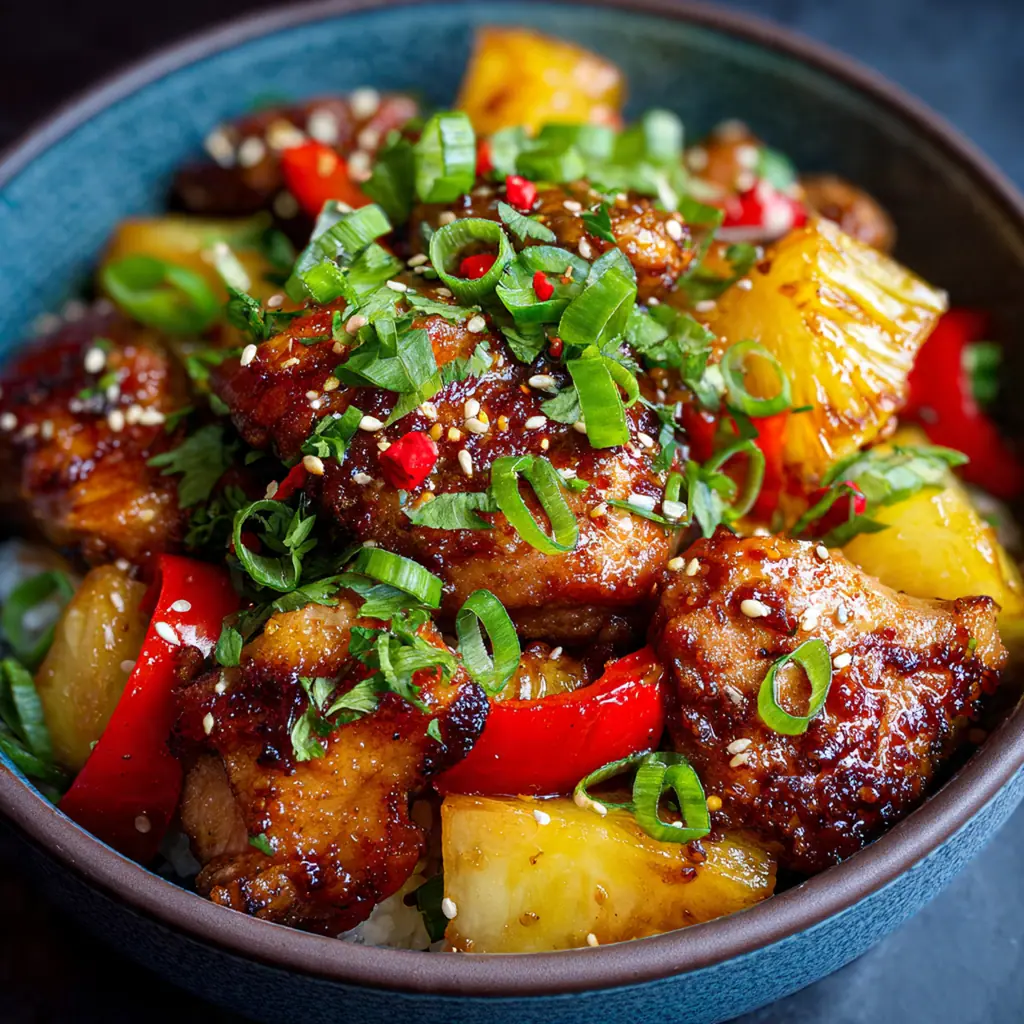
Sweet Sticky Pineapple Chicken brings a taste of the tropics straight to your kitchen, blending savory notes with a caramelized pineapple kick. This Asian-inspired favorite skips the takeout line and delivers a glossy, homemade sauce that’s far superior to anything from a box. You get tender chicken thighs tucked under a sweet and tangy glaze that feels like a celebration in every bite. I’ve made this countless times when I crave something vibrant yet comforting after a long day.
Why You'll Love This Recipe
- Restaurant-quality flavor at home in just 40 minutes
- Uses simple pantry ingredients you probably already have
- The homemade sauce is way better than bottled versions
- Perfectly balanced sweet and tangy flavors everyone enjoys
- Kids absolutely love this dish – it’s a guaranteed family favorite
Ingredients You’ll Need
- Boneless, skinless chicken thighs: These stay incredibly juicy during high-heat cooking and absorb the sweet pineapple flavors much better than lean breast meat. Always look for thighs that have a nice pink color and minimal excess fat for the best texture.
- Cornstarch: This creates that signature ultra-crispy coating that protects the meat while frying. It also thickens the sauce later, giving you that glossy, sticky finish. Make sure it’s fresh and clump-free for the best results.
- Salt and black pepper: These basics bring out the natural flavors of the chicken and season the crispy coating. Don’t skimp here; a good seasoning base makes all the difference in the final taste.
- Vegetable oil: A neutral oil with a high smoke point is perfect for getting that golden-brown sear without burning. You want the pan shimmering but not smoking before adding the chicken.
- Fresh pineapple chunks: These provide the bright, acidic sweetness that cuts through the rich sauce. If using canned, drain them very well so you don’t end up with a watery stir-fry. Look for chunks that smell sweet and tropical.
- Brown sugar: This brings deep molasses notes and that addictive caramelization to the glaze. Pack it tightly in your measuring cup to ensure you get the right sweetness balance against the vinegar and soy.
- Ketchup: It adds body, color, and a savory tomato tang that rounds out the sauce. It’s a secret pantry staple that ties the sweet and savory elements together perfectly.
- Pineapple juice: Using the juice from the can or fresh fruit intensifies the tropical flavor throughout the dish. It replaces plain water and ensures the sauce tastes like actual pineapple, not just sugar.
- Soy sauce: This provides the essential umami saltiness that anchors the sweetness. It creates a beautiful dark color for the glaze. For gluten-free diets, tamari is a seamless swap.
- Rice vinegar: Just a splash wakes up the whole dish with a clean, sharp acidity. It balances the heavy sugar and ketchup, preventing the sauce from becoming cloyingly sweet.
- Garlic: Freshly minced garlic releases a pungent aroma that infuses the oil and sauce. Pre-minced jars work in a pinch, but fresh cloves offer a much brighter, sharper bite.
- Fresh ginger: Grating fresh ginger adds a zesty warmth and a little peppery heat. It pairs beautifully with the garlic and pineapple. Keep a knob of ginger in your freezer; it grates easily when frozen.
- Cornstarch slurry: Mixing cornstarch with water activates its thickening power without creating lumps. This is the magic ingredient that transforms the thin liquid into a rich glaze that clings to every piece of chicken.
- Green onions: Sliced thin and tossed in at the end, these add a fresh, mild onion bite and a pop of color. They keep the dish from looking flat and add a final layer of freshness.
- Red bell pepper: This optional add-in brings a sweet crunch and beautiful red color to the mix. It pairs naturally with pineapple and adds extra nutrition and texture to the meal.
- Sesame seeds: A sprinkle of these toasty seeds adds a nutty crunch and a professional-looking finish. They look beautiful against the glossy red sauce and add a subtle savory note.
- Fresh cilantro leaves: Bright, herbal, and distinctly fresh, cilantro cuts through the richness of the sticky sauce. It’s the perfect garnish if you enjoy its unique, citrusy flavor profile.
How to Make It
Prep The Chicken:
Start by cutting your chicken thighs into uniform 1-inch cubes. Pat them completely dry with paper towels, really pressing to remove as much moisture as possible. This drying step is crucial because any water left on the surface will prevent the cornstarch from sticking and getting truly crispy.
Coat The Chicken:
In a large bowl, toss the dry chicken pieces with cornstarch, salt, and black pepper until every single cube is evenly coated. Shake off any excess powder gently; you want a thin, even layer, not a thick cakey crust. Let it sit for a minute while your pan heats up to let the coating adhere.
Sear The Chicken:
Heat the vegetable oil in a large skillet or wok over medium-high heat until it shimmers. Add the chicken in a single layer, working in batches to avoid overcrowding the pan. Cook for 4-5 minutes per side until it’s deep golden brown and crispy, then transfer to a clean plate. Don’t worry if it’s not cooked through completely; it will finish later.
Char The Pineapple:
In the same hot skillet, toss in the pineapple chunks. Let them sit undisturbed for a minute or two to get some nice caramelization and dark char marks. This intensifies their sweetness. Remove them from the pan and set them aside with the chicken for now.
Build The Aromatics:
Turn the heat down to medium and add the minced garlic and grated ginger to the fragrant oil left in the pan. Stir constantly for about 30 seconds until you can really smell them, being careful not to let them burn or they’ll turn bitter.
Simmer The Sauce:
Pour in the brown sugar, ketchup, pineapple juice, soy sauce, and rice vinegar. Whisk everything together and bring it to a steady simmer. Let it bubble gently for 2-3 minutes to meld the flavors and allow the sugar to dissolve completely.
Thicken The Glaze:
Give your cornstarch and water mixture a quick stir, then slowly pour it into the simmering sauce while whisking constantly. Keep stirring until the sauce thickens up and turns glossy, about 1-2 minutes. You want it to coat the back of a spoon thickly.
Combine Everything:
Add the cooked chicken and pineapple chunks back into the skillet. Toss everything vigorously until every piece is completely coated in that sticky glaze. Let it cook together for 2-3 minutes so the chicken heats through and absorbs some of the sauce flavor.
Finish And Serve:
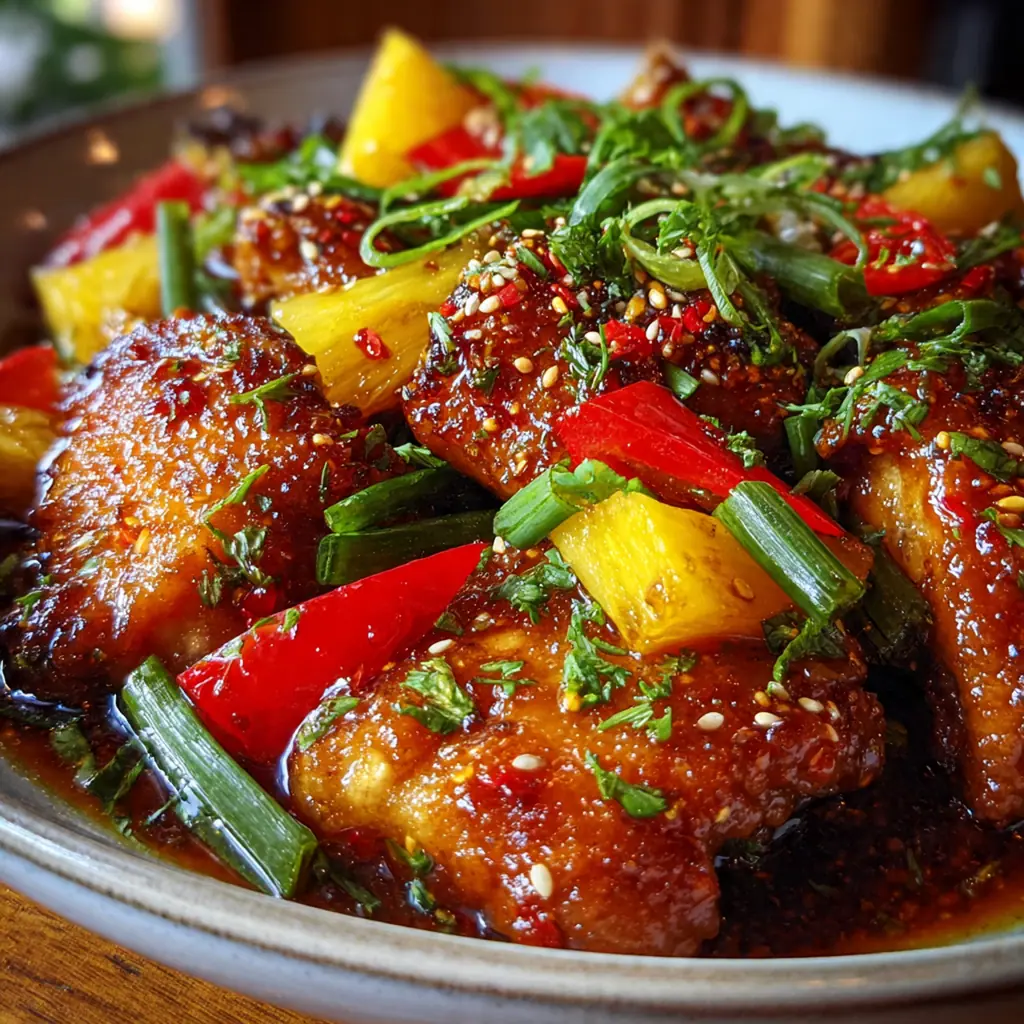
Take the skillet off the heat and immediately stir in the sliced green onions. Taste a piece and add a pinch more salt or pepper if you think it needs it. Serve immediately while the sauce is hot, sticky, and clinging to the chicken.
You Must Know
- Patting the chicken dry is the secret to a crispy coating that doesn’t slide off.
- Fresh pineapple makes a brighter sauce, but well-drained canned pineapple works great too.
- Don’t walk away while simmering the sugar and ketchup; it can bubble over fast.
- For gluten-free, swap the soy sauce for tamari and you’re all set.
- I always save a little extra fresh ginger to grate on top at the end.
Storage Tips
Store any leftover Sweet Sticky Pineapple Chicken in an airtight container in the refrigerator for up to 3 days. The coating will naturally soften as it sits in the sauce, but the flavor remains fantastic. To reheat, I recommend using a skillet over medium heat for about 5-7 minutes, stirring occasionally to warm it through evenly and keep the sauce moving. You can microwave it in 30-second bursts for convenience, but the chicken won’t regain its initial crispiness this way. This dish isn’t ideal for freezing, as the sauce texture tends to change and separate upon thawing.
Ingredient Substitutions
If you don’t have fresh pineapple, canned chunks are an excellent substitute—just be sure to drain them thoroughly and reserve the juice for the sauce. For the chicken, you can use boneless breasts if you prefer leaner meat, though you’ll need to watch the cooking time closely to prevent drying out. If you’re out of rice vinegar, a splash of white vinegar or apple cider vinegar mixed with a pinch of sugar will provide a similar tangy balance. Tamari or coconut aminos can easily replace the soy sauce for a gluten-free or soy-free version without sacrificing that savory umami depth.
Serving Suggestions
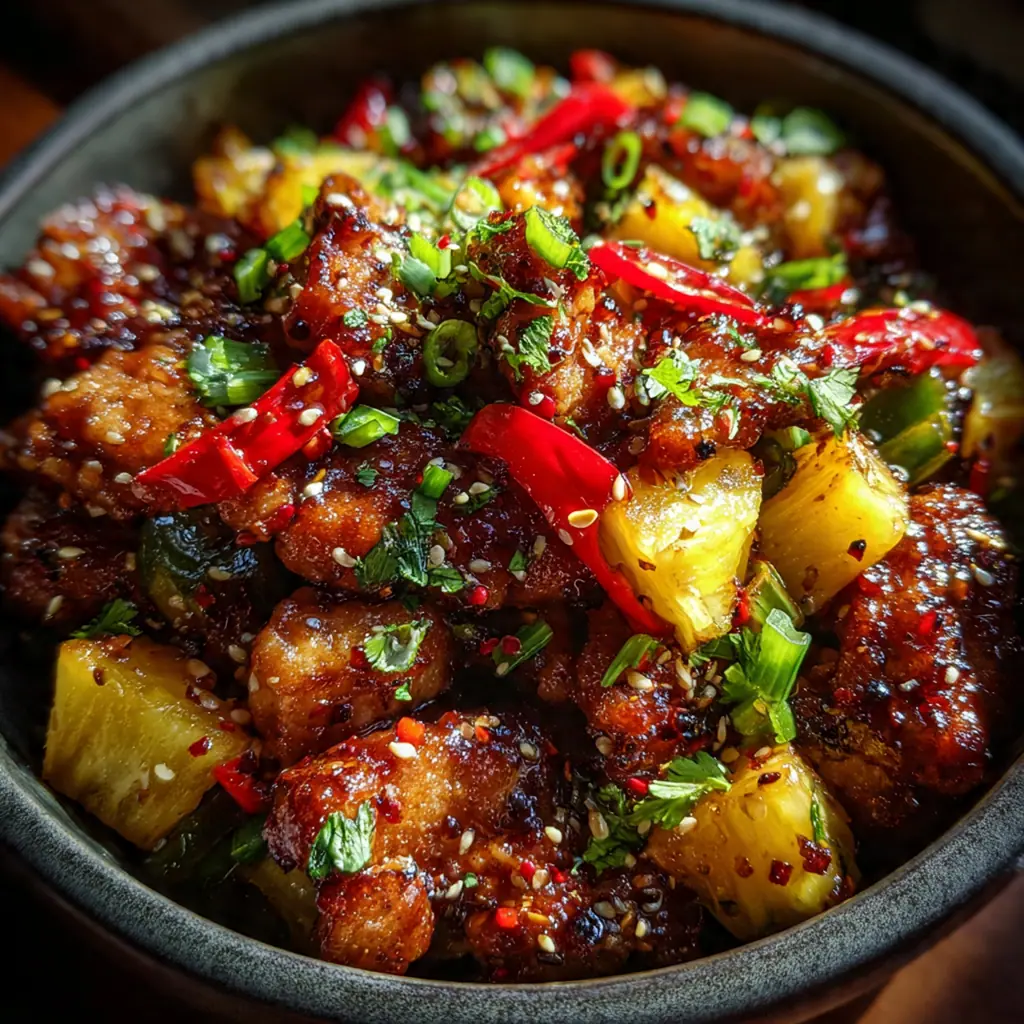
I love serving this Sweet Sticky Pineapple Chicken over a bed of steamed jasmine rice to soak up every drop of the glorious sauce; coconut rice is a fantastic tropical alternative. For a balanced meal, pair it with simple steamed broccoli, crisp snap peas, or a crunchy Asian slaw to add texture and freshness. Sprinkle toasted sesame seeds and a few extra sliced green onions on top right before eating for a beautiful presentation and an added nutty crunch.
Cultural Context
This dish draws heavy inspiration from Chinese-American takeout classics, where the goal is a perfect harmony of sweet, savory, and tangy flavors. While not a traditional dish from a specific region of China, it represents a beloved style of cooking that has become a staple in households and restaurants across the United States. The use of pineapple in savory stir-fries gained popularity in the mid-20th century and has remained a crowd-pleaser, symbolizing a fusion of accessible Western ingredients with Asian cooking techniques.
Pro Tips
- Use chicken thighs for guaranteed juiciness; they forgive slight overcooking much better tha…
- Don’t skip the drying step; moisture is the number one enemy of crispy chicken.
- Keep the sauce thick by not adding too much extra liquid; you want it sticky, not soupy.
- Serve immediately after tossing; the coating softens if it sits in the hot sauce too long.
- I like to add a tiny splash of extra pineapple juice at the very end for a burst of fresh fl…
Frequently Asked Questions
Yes, you can absolutely substitute chicken breasts for thighs in this Sweet Sticky Pineapple Chicken. However, chicken thighs are more forgiving and stay juicier due to their higher fat content. If using breasts, be careful not to overcook them, as they can dry out faster. Cut them into even 1-inch pieces and monitor them closely while cooking.
Both fresh and canned pineapple work well for Sweet Sticky Pineapple Chicken. Fresh pineapple offers a brighter, slightly more acidic flavor, while canned pineapple (drained) is convenient and often a bit sweeter. If using canned, look for chunks packed in juice rather than heavy syrup to control the overall sweetness of the dish.
Since this is an Asian-Inspired main dish, it pairs perfectly with steamed jasmine or white rice to soak up the delicious sauce. For a complete meal, you could also serve it alongside stir-fried vegetables like broccoli, bell peppers, or snap peas. Cauliflower rice is a great low-carb alternative.
Store leftover Sweet Sticky Pineapple Chicken in an airtight container in the refrigerator for up to 3 days. To reheat, gently warm it in a skillet over low heat with a splash of water or pineapple juice to loosen the sauce. Microwaving works too, but the stovetop helps maintain the texture of the chicken.
The chicken is ready when it’s golden brown and crispy on the outside, and the internal temperature reaches 165°F (74°C). The sauce should be thick and glossy, coating the chicken pieces evenly. The total cook time of 25 minutes is a guideline; always rely on the visual cues of golden-brown chicken and thickened sauce.